 Dynamo
Introduction
The job market is changing faster than ever before. Advances in technology, remote work, artificial intelligence, and digital transformation have reshaped how businesses hire talent. Today, many employers are less concerned about whether a candidate holds a traditional university degree and more interested in whether they possess practical, job-ready skills.
This shift has created what experts often call the skills gap—the difference between the skills employers need and the skills many job seekers currently have. While this gap presents a challenge for businesses, it also creates a significant opportunity for individuals willing to learn new, in-demand skills.
One of the most accessible ways to bridge this gap is through online certifications. These programs allow learners to acquire industry-relevant knowledge from anywhere in the world, often at a fraction of the cost of a university degree. Many can be completed within weeks or months, making them an attractive option for career changers, students, freelancers, and professionals seeking advancement.
Whether your goal is to secure a remote job, increase your earning potential, start freelancing, or transition into a growing industry, online certifications can help you build the expertise employers value.
In this guide, you’ll discover why the skills gap exists, how online certifications can accelerate your career, and which certifications offer the strongest employment prospects.
Understanding the Skills Gap
The term skills gap refers to the mismatch between the qualifications employers seek and the capabilities available in today’s workforce.
Businesses across industries report difficulty finding professionals with practical expertise in areas such as:
- Digital marketing
- Cybersecurity
- Data analytics
- Cloud computing
- Software development
- Artificial intelligence
- Project management
- User experience (UX) design
- Financial technology
- Customer success management
These shortages continue to grow because technology evolves more rapidly than traditional education systems can adapt.
As a result, companies increasingly prioritize candidates who can demonstrate practical skills, regardless of whether they earned them through a university degree or an online certification.
Why Employers Are Hiring Based on Skills Instead of Degrees
Hiring practices have changed significantly over the past decade.
Many organizations now evaluate applicants using skills-based assessments rather than relying solely on academic credentials.
Several factors have contributed to this trend.
1. Technology Changes Quickly
Software, programming languages, marketing platforms, and business tools evolve constantly. Professionals who continuously update their knowledge remain more valuable than those relying solely on qualifications earned years earlier.
2. Practical Experience Matters
Employers want candidates who can contribute immediately. Individuals with hands-on projects, certifications, and portfolios often demonstrate stronger job readiness than applicants with theoretical knowledge alone.
3. Remote Hiring Expands Talent Pools
Remote work enables companies to recruit talent globally. Instead of limiting recruitment to local graduates, organizations can hire skilled professionals from different countries based on demonstrated abilities.
4. Faster Recruitment
Certifications focused on specific skills make it easier for recruiters to identify qualified candidates without lengthy training periods.
Why Online Certifications Continue to Gain Popularity
Online education has evolved dramatically in recent years. Modern certification programs combine video lessons, interactive exercises, assessments, and real-world projects to help learners develop practical expertise.
Some advantages include:
Flexible Learning
Most online courses allow learners to study at their own pace, making them suitable for people balancing work, school, or family commitments.
Lower Costs
Compared with traditional degree programs, certification courses are often far more affordable.
Industry-Relevant Content
Many certification providers regularly update their course materials to reflect current technologies and workplace practices.
Practical Projects
Instead of relying solely on exams, many programs include hands-on assignments that can strengthen your professional portfolio.
Global Recognition
Many employers recognize reputable certifications as evidence of initiative, continuous learning, and technical competence.
Benefits of Closing the Skills Gap
Developing in-demand skills offers advantages that extend beyond finding employment.
Increased Employability
Candidates with relevant certifications often stand out during recruitment because they demonstrate commitment to professional development.
Greater Career Flexibility
Many certified professionals qualify for:
- Remote positions
- Hybrid work arrangements
- Freelance projects
- Contract opportunities
- Full-time employment
This flexibility allows individuals to tailor their careers to their personal and financial goals.
Higher Earning Potential
Specialized expertise often commands higher salaries than general administrative roles.
Professionals with certifications in areas such as cloud computing, cybersecurity, project management, or digital marketing may qualify for positions offering competitive compensation, depending on experience, employer, and location.
Faster Career Transitions
Instead of spending several years earning another degree, professionals can often prepare for entry-level positions within months by completing targeted certification programs and building a strong portfolio.
Choosing the Right Online Certification
Not every certification delivers the same value. Selecting a program aligned with employer demand and your career goals is essential.
Consider the following factors before enrolling.
Industry Demand
Research whether employers actively recruit professionals with the skills taught in the certification.
Growing industries generally offer stronger long-term career prospects.
Course Quality
Look for programs that include:
- Practical assignments
- Real-world projects
- Assessments
- Instructor support
- Updated learning materials
Employer Recognition
Well-recognized certifications may strengthen your résumé and improve credibility during interviews.
Portfolio Opportunities
Programs that require practical projects help learners demonstrate their abilities to potential employers.
Continuing Education
The strongest certifications encourage ongoing learning as industries evolve.
High-Demand Fields That Welcome Certified Professionals
Several industries consistently seek professionals with practical skills.
Digital Marketing
Businesses increasingly rely on digital channels to reach customers.
Professionals skilled in search engine optimization (SEO), content marketing, paid advertising, email marketing, and analytics remain in demand across many sectors.
Common roles include:
- Digital Marketing Specialist
- SEO Specialist
- Content Strategist
- PPC Campaign Manager
- Email Marketing Specialist
Data Analytics
Organizations generate enormous amounts of data every day.
Data analysts help businesses interpret information to improve decision-making, reduce costs, and identify growth opportunities.
Key skills include:
- Spreadsheet analysis
- Data visualization
- SQL
- Business intelligence
- Reporting
- Dashboard creation
Cybersecurity
As cyber threats become increasingly sophisticated, organizations continue investing in security professionals who can protect systems and sensitive information.
Entry-level certifications can provide a pathway into security operations, risk management, and compliance roles.
Cloud Computing
Cloud platforms support modern business operations worldwide.
Professionals who understand cloud infrastructure, deployment, storage, and security are highly sought after by employers across industries.
Project Management
Every organization depends on effective planning and execution.
Project managers coordinate teams, budgets, timelines, and resources to deliver successful outcomes.
Certification programs often teach:
- Risk management
- Scheduling
- Leadership
- Stakeholder communication
- Agile methodologies
- Resource planning
UX/UI Design
User experience plays a critical role in digital products.
Designers create intuitive websites, mobile applications, and software interfaces that improve customer satisfaction and business performance.
Skills typically include:
- Wireframing
- Prototyping
- User research
- Visual design
- Accessibility
- Design systems
Software Development
Software developers remain among the most sought-after professionals worldwide.
Entry-level certifications and coding bootcamps often introduce learners to:
- HTML
- CSS
- JavaScript
- Python
- APIs
- Version control
- Database fundamentals
With consistent practice and portfolio development, learners can pursue junior development roles or freelance opportunities.
Artificial Intelligence and Machine Learning
Artificial intelligence continues transforming industries such as healthcare, finance, education, logistics, and customer service.
Professionals with foundational AI knowledge can contribute to projects involving automation, data analysis, and intelligent software solutions.
Many beginner-friendly certification programs focus on practical concepts without requiring advanced mathematics.
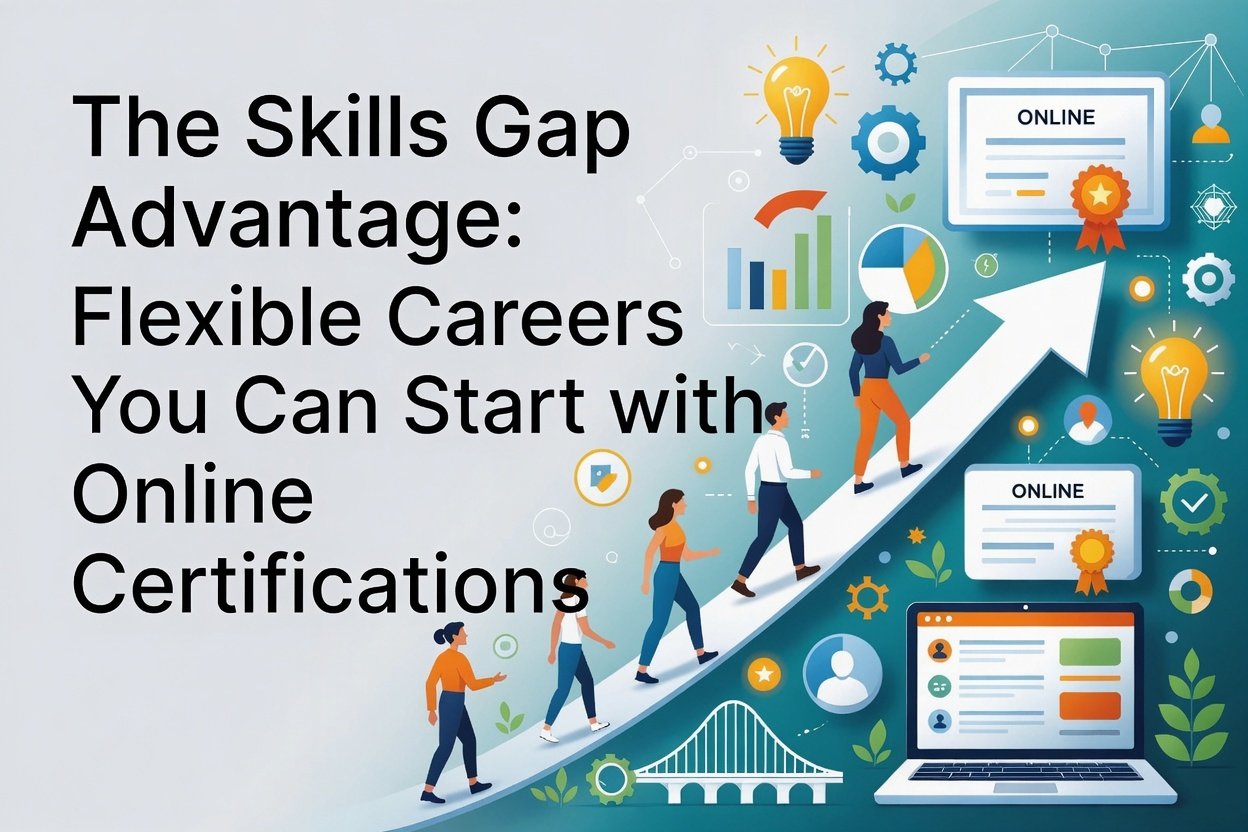
Flexible Careers You Can Start with Online Certifications
As employers continue shifting toward skills-based hiring, professionals with practical expertise can access opportunities across industries without following a traditional career path. Many of these roles support remote work, freelance projects, contract positions, or hybrid employment, allowing you to choose the work style that best fits your goals.
Below are some of the most promising careers that can be launched with relevant online certifications, hands-on practice, and a strong portfolio.
1. Digital Marketing Specialist
Digital marketing has become one of the fastest-growing career fields worldwide. Nearly every business—from startups to multinational companies—needs professionals who can attract customers online.
A certified digital marketing specialist may work on:
- Search engine optimization (SEO)
- Content marketing
- Social media campaigns
- Email marketing
- Paid advertising
- Marketing analytics
- Conversion optimization
One advantage of this field is its flexibility. Many professionals begin as freelancers before moving into full-time employment or launching their own digital marketing agencies.
Typical Responsibilities
- Creating marketing campaigns
- Improving website visibility in search engines
- Managing advertising budgets
- Monitoring website traffic
- Writing optimized content
- Analyzing campaign performance
Skills That Employers Value
- SEO fundamentals
- Google Analytics
- Content strategy
- Keyword research
- Marketing automation
- Copywriting
- Data interpretation
Career Growth
With experience, professionals may advance into positions such as:
- Marketing Manager
- Growth Marketing Specialist
- SEO Manager
- Content Marketing Lead
- Digital Strategy Consultant
2. Data Analyst
Businesses collect vast amounts of information every day. Data analysts transform raw information into meaningful insights that help organizations improve performance and make informed decisions.
This career combines analytical thinking with technical skills and is increasingly available through remote work arrangements.
Daily Responsibilities
- Cleaning datasets
- Building reports
- Creating dashboards
- Identifying trends
- Preparing business recommendations
- Supporting management decisions
Common Skills
- Excel
- SQL
- Data visualization
- Business intelligence tools
- Statistics
- Reporting
Why It’s Attractive
Organizations across healthcare, finance, retail, education, manufacturing, logistics, and technology rely on data analysts, creating opportunities in a wide range of industries.
3. Cybersecurity Analyst
As cyber threats continue to evolve, businesses are investing heavily in protecting sensitive information and digital infrastructure.
Entry-level cybersecurity professionals often monitor systems, identify vulnerabilities, and help reduce security risks.
Typical Duties
- Monitoring security alerts
- Investigating suspicious activity
- Assessing vulnerabilities
- Supporting compliance efforts
- Assisting with incident response
- Recommending security improvements
Valuable Skills
- Network security
- Risk assessment
- Threat detection
- Security policies
- Identity management
- Basic scripting
Cybersecurity offers strong long-term career prospects because organizations of all sizes require ongoing protection against emerging threats.
4. Cloud Support Specialist
Cloud computing powers many of today’s digital services.
Cloud professionals help businesses deploy, maintain, and optimize cloud-based systems.
Responsibilities
- Managing cloud resources
- Supporting migrations
- Monitoring infrastructure
- Troubleshooting technical issues
- Maintaining cloud security
- Optimizing system performance
Skills Needed
- Cloud platforms
- Networking basics
- Virtualization
- Storage solutions
- Cloud security
- System administration
As organizations continue adopting cloud technologies, demand for skilled professionals remains strong.
5. Project Coordinator
Project management certifications can prepare individuals for entry-level project coordination roles.
Project coordinators assist managers by organizing schedules, tracking milestones, coordinating communication, and ensuring projects remain on schedule.
Daily Tasks
- Scheduling meetings
- Tracking deadlines
- Managing documentation
- Coordinating team communication
- Updating project plans
- Preparing reports
Skills Employers Seek
- Organization
- Leadership
- Time management
- Communication
- Risk awareness
- Problem-solving
Project management experience can lead to senior leadership opportunities across many industries.
6. UX/UI Designer
Every successful website and mobile application depends on a positive user experience.
UX/UI designers focus on making digital products attractive, intuitive, and easy to use.
Responsibilities
- Designing wireframes
- Building prototypes
- Conducting usability testing
- Researching user behavior
- Improving navigation
- Collaborating with developers
Important Skills
- Design software
- User research
- Visual communication
- Accessibility principles
- Interaction design
- Prototyping
Creative professionals often enjoy this field because it combines design thinking with practical problem-solving.
7. Web Developer
Web development remains one of the most accessible technology careers for beginners willing to learn through online courses and practical projects.
Developers create websites, maintain web applications, and improve user experiences.
Common Responsibilities
- Writing code
- Fixing website errors
- Building responsive pages
- Integrating databases
- Improving website speed
- Testing functionality
Core Skills
- HTML
- CSS
- JavaScript
- Version control
- Responsive design
- Basic backend development
Many developers build freelance careers before accepting permanent positions.
8. Content Writer and SEO Specialist
Organizations depend on high-quality content to educate customers and improve search engine visibility.
Professional writers create:
- Blog articles
- Landing pages
- Product descriptions
- Website copy
- Email newsletters
- Industry guides
SEO specialists optimize this content to increase organic website traffic.
Skills Required
- Keyword research
- SEO writing
- Editing
- Research
- Content planning
- Analytics interpretation
Strong writing portfolios often matter more than formal qualifications.
9. Virtual Assistant
Virtual assistants provide administrative and operational support to businesses remotely.
This role offers flexibility for individuals with strong organizational skills.
Typical services include:
- Email management
- Calendar scheduling
- Customer support
- Data entry
- Travel coordination
- Document preparation
Many virtual assistants eventually specialize in industries such as real estate, healthcare, legal services, or e-commerce.
10. Customer Success Specialist
Customer success professionals help clients maximize the value of products and services after purchase.
Rather than focusing solely on solving problems, they build long-term customer relationships.
Responsibilities often include:
- Client onboarding
- Product education
- Account management
- Customer retention
- Performance reviews
- Renewals support
Communication and problem-solving skills are especially valuable in this profession.
Building a Portfolio That Gets Attention
Completing a certification is only the beginning. Employers and clients often want evidence that you can apply what you’ve learned.
An effective portfolio may include:
- Personal projects
- Practice assignments
- Case studies
- Volunteer work
- Freelance projects
- Before-and-after examples
- Process documentation
- Testimonials from clients or collaborators
A well-organized portfolio demonstrates initiative, practical ability, and continuous learning.
How to Get Your First Job or Client
Breaking into a new industry can seem challenging, but a strategic approach can improve your chances.
Tailor Your Résumé
Highlight:
- Certifications
- Relevant projects
- Transferable skills
- Volunteer experience
- Technical competencies
- Measurable achievements
Focus on what you can do rather than what you lack.
Build an Online Presence
Many recruiters and clients review online profiles before making hiring decisions.
Consider maintaining:
- A professional networking profile
- A personal portfolio website
- A GitHub profile (for developers)
- A design portfolio (for designers)
- A writing portfolio (for content professionals)
Keep your profiles updated with recent projects and certifications.
Practice Through Freelancing
Freelance work provides valuable real-world experience.
Even small projects can help you:
- Develop confidence
- Build testimonials
- Expand your portfolio
- Learn client communication
- Improve project management skills
Over time, consistent work can lead to referrals and larger opportunities.
Continue Learning
Industries evolve quickly. Successful professionals commit to continuous improvement.
Stay current by:
- Taking advanced certification courses
- Reading industry publications
- Attending webinars
- Joining professional communities
- Following trusted experts
- Practicing new skills regularly
Continuous learning demonstrates adaptability—an increasingly valuable trait in today’s workplace.
Salary Expectations
Compensation varies widely depending on several factors, including:
- Geographic location
- Industry
- Employer
- Years of experience
- Technical specialization
- Portfolio quality
- Professional certifications
Many of these careers also offer opportunities to increase earnings through promotions, consulting, freelance work, or specialization in high-demand areas.
When evaluating career options, consider long-term growth potential alongside starting salaries.
Why Employers Value Certified Professionals
While certifications alone do not guarantee employment, they demonstrate several qualities that employers appreciate:
- Commitment to professional development
- Willingness to learn independently
- Familiarity with current industry practices
- Practical knowledge of relevant tools
- Motivation to improve continuously
When combined with hands-on experience and strong communication skills, certifications can strengthen your competitiveness in today’s job market.
Step-by-Step Career Roadmap, FAQs, Conclusion, and Google AdSense Compliance
A Step-by-Step Roadmap to Building a Flexible Career
Starting a new career through online certifications does not happen overnight, but it can be a realistic and rewarding path when approached with consistency and clear goals. Rather than trying to learn everything at once, focus on building a strong foundation and gaining practical experience over time.
Step 1: Define Your Career Goal
Before enrolling in any course, identify the type of work you want to do. Ask yourself questions such as:
- Do I enjoy solving technical problems?
- Would I prefer a creative career?
- Am I interested in working with data?
- Do I want a remote or hybrid job?
- Would I like to freelance or work for an employer?
Having a clear direction helps you choose certifications that align with your long-term objectives.
Step 2: Research Industry Demand
Not every skill is equally sought after. Spend time researching industries experiencing sustained growth and the qualifications employers commonly request.
Review job descriptions to identify recurring requirements, software tools, and technical skills. This can help you prioritize certifications that have practical workplace value.
Step 3: Complete a Reputable Certification
Select a certification that offers:
- Structured learning
- Practical assignments
- Industry-relevant projects
- Updated course materials
- Opportunities to demonstrate your skills
Focus on understanding the concepts rather than rushing to earn the certificate.
Step 4: Build Practical Experience
Employers often value demonstrated ability as much as formal credentials.
Consider strengthening your experience by:
- Completing personal projects
- Volunteering for community organizations
- Assisting local businesses
- Participating in open-source projects (where applicable)
- Creating case studies based on realistic scenarios
Every completed project adds credibility to your portfolio.
Step 5: Create a Professional Portfolio
Your portfolio should showcase what you can do, not simply list the courses you’ve completed.
Depending on your career path, include:
- Sample projects
- Reports
- Designs
- Websites
- Marketing campaigns
- Dashboards
- Writing samples
- Testimonials
- Project summaries
A clear, well-organized portfolio can make a strong impression during interviews.
Step 6: Strengthen Your Professional Presence
Many recruiters review candidates online before scheduling interviews.
Maintain professional profiles that accurately reflect your:
- Skills
- Certifications
- Projects
- Career interests
- Professional achievements
Consistency across your résumé, portfolio, and online profiles helps establish credibility.
Step 7: Apply Consistently
Career transitions often require persistence.
Instead of focusing on submitting a large number of applications, prioritize quality by tailoring each application to the specific role.
Highlight:
- Relevant certifications
- Transferable experience
- Practical projects
- Measurable accomplishments
A personalized application generally stands out more than a generic one.
Common Mistakes to Avoid
Many learners complete excellent courses but struggle to convert their knowledge into career opportunities. Avoiding these common mistakes can improve your chances of success.
1. Collecting Certificates Without Practicing
Certificates demonstrate learning, but employers also want evidence that you can apply your skills.
Balance study with practical projects.
2. Ignoring Soft Skills
Technical expertise is important, but communication, teamwork, adaptability, and problem-solving are equally valuable in many workplaces.
Develop both technical and interpersonal skills.
3. Expecting Immediate Results
Building a new career takes time.
Stay consistent, continue learning, and view each project or interview as an opportunity to improve.
4. Neglecting Networking
Professional relationships can lead to mentorship, collaboration, and job opportunities.
Participate in industry communities, attend webinars, and engage with professionals in your chosen field.
5. Stopping After One Course
Technology and business practices evolve rapidly.
Successful professionals treat learning as an ongoing process rather than a one-time achievement.
Frequently Asked Questions
Are online certifications enough to get a job?
Certifications can strengthen your qualifications, but employers often evaluate candidates based on a combination of practical skills, experience, communication, and cultural fit. A strong portfolio and relevant projects can significantly improve your prospects.
How long does it take to complete an online certification?
The duration varies by program. Some introductory certifications can be completed in a few weeks, while more comprehensive programs may take several months, depending on your schedule and the course requirements.
Can I switch careers without another university degree?
In many industries, particularly those focused on digital and technical skills, practical experience and relevant certifications can support a successful career transition. However, specific educational requirements vary by profession, employer, and country.
Which industries currently value skills-based hiring?
Skills-based hiring has become increasingly common in areas such as:
- Digital marketing
- Software development
- Data analytics
- Cybersecurity
- Cloud computing
- UX/UI design
- Project management
- Customer success
- Technical support
- Content creation
Always review current job postings to understand employer expectations within your chosen field.
Can online certifications support freelance careers?
Yes. Many freelancers build successful businesses by combining certifications with a portfolio that demonstrates real-world capabilities. Consistent, high-quality work and strong client relationships are often key factors in long-term success.
Final Thoughts
The skills gap represents more than a workforce challenge—it is an opportunity for individuals who are willing to invest in continuous learning and practical skill development.
Online certifications have made professional education more accessible than ever, allowing learners from diverse backgrounds to develop competencies that employers value. While a certificate alone does not guarantee employment, combining structured learning with hands-on experience, a polished portfolio, and ongoing professional development can improve your competitiveness in today’s evolving job market.
Whether your goal is to pursue remote work, transition into a new industry, freelance, or advance within your current profession, developing in-demand skills is a practical step toward expanding your career options.
Remember that career growth is a journey. Focus on learning consistently, applying your knowledge through meaningful projects, and refining your expertise over time. With patience, persistence, and a commitment to continuous improvement, you can position yourself for opportunities in a rapidly changing global workforce.


 Dynamo