 Dynamo
Master’s scholarships in Australia and New Zealand for Nigerian students in 2026: discover scholarship funding, tuition fees, eligibility, student visa requirements and post-study work options.
Planning a master’s degree overseas can be exciting, but the cost of international tuition, accommodation, health insurance and immigration requirements can make the decision complicated. For Nigerian students, Master’s scholarships in Australia and New Zealand for Nigerian students can provide a way to reduce tuition costs and, in some cases, cover substantial study and living expenses.
Australia and New Zealand both offer scholarship opportunities for international students, although the funding structures are different. Australia has government-funded schemes such as Australia Awards Scholarships and the Research Training Program, while universities in both countries offer their own international student scholarships.
One important point for applicants planning for 2026 and 2027 is that scholarship eligibility changes frequently. A scholarship that accepts students from Nigeria may have different requirements from one that is available only to citizens of particular countries, academic disciplines or regions.
This guide explains the major scholarship routes, eligibility considerations, tuition and living-cost planning, student visa requirements, application strategies and post-study work considerations for Nigerian students considering a master’s degree in Australia or New Zealand.
Table of Contents
- Why Consider Australia or New Zealand for a Master’s?
- Types of Master’s Scholarships Available
- Australia Awards Scholarships for Nigerian Students
- Research Training Program Scholarships in Australia
- Australian University Scholarships for International Students
- Master’s Scholarships in New Zealand
- Important Note About Manaaki New Zealand Scholarships
- Eligibility Requirements for Nigerian Applicants
- Scholarship Documents You Should Prepare
- Australia Student Visa Requirements
- New Zealand Student Visa Requirements
- Tuition Fees and Cost of Living
- Can You Work While Studying?
- Post-Study Work Opportunities
- How to Apply Successfully
- Common Scholarship Mistakes to Avoid
- Final Checklist for Nigerian Applicants
- Conclusion
1. Why Consider Australia or New Zealand for a Master’s?
Australia and New Zealand attract international students because they offer established higher-education systems, internationally recognised qualifications and opportunities to gain professional experience.
For a Nigerian student, the decision should not be based on the destination alone. The most important questions are:
- What is the total tuition cost?
- Is the scholarship fully funded or partially funded?
- Does the scholarship cover living expenses?
- What are the student visa requirements?
- Is health insurance required?
- Can you legally work while studying?
- What happens after graduation?
- Does the course match your previous education and career goals?
These questions matter because a scholarship covering only part of tuition may still leave a substantial amount to pay.
Australia’s government also provides financial assistance through several scholarship programs. The Australian Government’s Research Training Program, for example, supports domestic and overseas students undertaking eligible research master’s and doctoral programs through participating universities.
For Nigerian applicants, Australia Awards Africa is another major route. Nigeria is listed among the participating countries for Australia Awards Scholarships.
2. Types of Master’s Scholarships Available
Before applying, it helps to understand the different types of scholarship funding.
Fully Funded Scholarships
A fully funded scholarship generally provides several forms of financial support rather than simply reducing tuition.
Depending on the program, benefits may include:
- Full or substantial tuition coverage
- Living-cost support
- Travel allowance
- Health insurance
- Establishment allowance
- Research or fieldwork support
- Academic support
However, applicants should always read the official scholarship conditions. “Fully funded” does not necessarily mean that every personal expense will be paid.
Tuition Fee Scholarships
These scholarships reduce tuition fees but may not provide enough money for accommodation, food, transportation, insurance or other expenses.
For example, some New Zealand university scholarships provide a fixed amount toward tuition rather than paying all study costs.
Research Scholarships
Research-focused scholarships can be particularly valuable for students applying for a research master’s degree.
Funding may include a tuition fee offset, stipend and research-related allowances.
Merit-Based Scholarships
Universities commonly use academic performance as part of their selection process. Some international scholarships require a particular GPA or equivalent academic standard.
Government Scholarships
Government scholarships are generally more structured and may have additional requirements relating to professional experience, development priorities, return-home conditions or eligible fields of study.
3. Australia Awards Scholarships for Nigerian Students
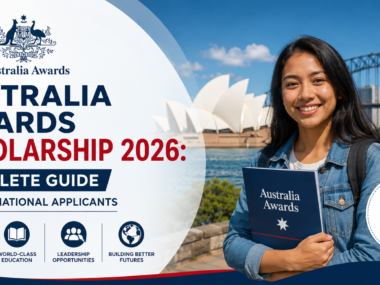
One of the most significant scholarship opportunities for Nigerian students is the Australia Awards Scholarships program.
Nigeria is included among the participating African countries. Australia Awards Africa provides master’s-level opportunities designed to develop professional skills and contribute to development outcomes in participating African countries.
The scholarship can provide substantial financial support, including:
- Full tuition fees
- Return air travel
- Establishment allowance
- Contribution to living expenses
- Introductory academic program
- Overseas Student Health Cover
- Supplementary academic support
- Eligible fieldwork support
The Australian Government states that Australia Awards Africa targets high-calibre mid- to senior-level professionals from the public, private and community sectors.
This means it is not simply a scholarship for any graduate who wants to study abroad. Applicants need to carefully examine the country-specific eligibility requirements and priority areas.
Is Australia Awards currently accepting applications?
The timing is important.
For study commencing in 2027, the Australian Government lists the Africa application period as opening on 1 February 2026 and closing on 30 April 2026.
Therefore, as of September 2026, Nigerian applicants should not assume that the 2027 Australia Awards application window is still open.
Instead, applicants should monitor the official Australia Awards Africa information for the next available intake.
Scholarship dates should always be verified before preparing an application because deadlines can change between intakes.
Australia Awards eligibility for Nigerian applicants
Country-specific requirements can be substantial.
Previous Australia Awards Africa intake information has included requirements concerning age, professional work experience, employment status, undergraduate qualifications and English-language proficiency.
The exact requirements for each intake should be checked against the current official country profile and policy handbook.
Applicants should not rely on an old scholarship blog or social-media post when determining eligibility.
4. Research Training Program Scholarships in Australia
For students interested in a research master’s degree, Australia’s Research Training Program (RTP) is another important funding route.
The Australian Government provides RTP funding to eligible universities to support domestic and overseas students undertaking higher degrees by research.
An RTP scholarship can include one or more of:
- Tuition fee offset
- Stipend for general living costs
- Ancillary allowances
Research master’s students may receive RTP support for up to two years of full-time study, subject to the applicable rules and university processes.
Importantly, students do not apply directly to the Australian Department of Education for an RTP scholarship.
Applications are handled by participating universities.
This means a Nigerian applicant should identify universities offering a suitable research master’s program and then investigate that institution’s RTP application process.
Competition can be strong, and universities may apply additional selection criteria.
5. Australian University Scholarships for International Students
Government programs are not the only route to scholarship funding.
Australian universities offer a wide range of scholarships to international students. These may be based on academic performance, field of study, research potential, leadership, nationality or other criteria.
For Nigerian students, a sensible strategy is to search university scholarship databases after identifying suitable master’s courses.
Rather than searching only for “fully funded scholarships,” also investigate:
- International student scholarships
- Merit scholarships
- Faculty scholarships
- Research scholarships
- Tuition fee waivers
- Postgraduate scholarships
- Industry-funded scholarships
- Academic excellence awards
A partial scholarship can still make an expensive international degree more affordable.
6. Master’s Scholarships in New Zealand
New Zealand provides scholarship opportunities through universities and other organisations.
The official Study with New Zealand scholarship database states that many New Zealand education providers offer scholarships to international students.
Some scholarships consider academic achievement, while others may take account of nationality, study area or leadership potential.
For Nigerian applicants, university-level scholarships can therefore be an important part of the search.
University of Auckland
The University of Auckland offers an International Student Excellence Scholarship for eligible new international students.
For eligible master’s applicants, the current scholarship information states that the award can provide a contribution of up to 25% of first-year tuition fees.
Eligibility includes academic requirements, and applicants must hold an appropriate offer of study.
The university’s current information also provides specific dates for applicants targeting the 2027 intake.
Victoria University of Wellington
Te Herenga Waka—Victoria University of Wellington offers the VUW Postgraduate International Scholarship.
The scholarship is valued at NZ$10,000 and is available to eligible new international students entering qualifying master’s or postgraduate diploma programs.
It is a partial tuition scholarship rather than a comprehensive living-cost package.
That distinction is important when preparing a financial plan.
University of Waikato
The University of Waikato offers the Vice-Chancellor’s International Excellence Scholarship.
The current scholarship information states that the award can provide up to NZ$15,000 toward tuition fees and is available to eligible new international students entering undergraduate or postgraduate programs.
The university uses academic achievement as part of the selection process.
Nigerian applicants should check the current eligibility rules before applying because individual scholarships may have country-specific exclusions or requirements.
7. Important Note About Manaaki New Zealand Scholarships
Manaaki New Zealand Scholarships are often mentioned in articles about studying in New Zealand.
However, applicants should not assume that every international student is eligible.
The current Study with New Zealand listing for Manaaki identifies eligibility restrictions for international students from Pacific and ASEAN countries.
Therefore, Nigerian students should not treat Manaaki as a generally available scholarship for Nigerians without checking the current eligible-country list.
This is an excellent example of why applicants should verify scholarship information through official government sources rather than relying on generic “top scholarships for international students” lists.
For Nigerian applicants, university-level international scholarships may therefore be more relevant when researching New Zealand.
8. Eligibility Requirements for Nigerian Applicants
Scholarship requirements vary, but you should expect to provide evidence in several areas.
Academic qualifications
Most master’s programs require a recognised bachelor’s degree or equivalent qualification.
Some competitive scholarships also impose minimum GPA or academic-performance requirements.
English-language proficiency
English-language requirements depend on the university, course and visa.
Applicants may need IELTS, TOEFL, PTE Academic or another accepted qualification.
Do not assume that studying an undergraduate degree in English automatically removes every English-language requirement.
Professional experience
Some government scholarships place significant emphasis on professional experience.
Australia Awards Africa, for example, is designed for experienced professionals and has country-specific requirements.
Leadership and career objectives
Competitive government scholarships may ask applicants to demonstrate leadership potential and explain how their proposed study will contribute to development outcomes.
Course relevance
Your proposed master’s degree should make sense in relation to your academic background and career plans.
A strong application normally explains:
- What you studied previously.
- What professional experience you have gained.
- What skills you need next.
- Why the master’s degree is appropriate.
- How you intend to use the qualification after graduation.
9. Scholarship Documents You Should Prepare
Preparing documents early can make the application process much easier.
Depending on the scholarship, you may need:
- Nigerian passport
- Bachelor’s degree certificate
- Academic transcripts
- Curriculum vitae
- Personal statement
- Statement of purpose
- Research proposal
- Academic references
- Professional references
- English-language test results
- Employment evidence
- Proof of professional experience
- Scholarship-specific forms
- Admission offer or application information
For research programs, a research proposal may be particularly important.
Do not copy generic personal statements from the internet. Scholarship committees want to understand your actual background, goals and reasons for choosing the program.
10. Australia Student Visa Requirements
Receiving a scholarship and receiving a visa are separate processes.
For Australia, most international students studying a master’s degree use the Student visa (subclass 500).
The application process can involve:
- Confirmation of Enrolment
- Financial-capacity evidence where required
- English-language evidence where required
- Genuine Student responses
- Overseas Student Health Cover
- Identity documentation
- Health and character requirements
The Australian Government states that student visa applicants must have enough money for their stay and should not rely on employment to support themselves or their family.
This is particularly important for students preparing a financial plan.
A scholarship can count as evidence of financial support where applicable, but applicants must follow the specific evidence requirements for their visa application.
Australia student visa work rights
Eligible student visa holders can generally work up to 48 hours per fortnight while their course is in session.
Students undertaking a master’s by research or doctoral degree may have different work-hour arrangements once their course has started.
Always check the conditions attached to your own visa.
Working while studying should be treated as supplementary income rather than the primary funding strategy.
11. New Zealand Student Visa Requirements
Nigerian students accepted into a New Zealand master’s program will generally need an appropriate student visa.
The Fee Paying Student Visa is one of the main routes for international students paying international tuition fees or receiving support from family, loans or partial scholarships.
Immigration New Zealand currently states that tertiary students generally need evidence of NZD $20,000 per year for living costs if studying for one year or more, in addition to tuition requirements.
Evidence can include funds, scholarship evidence, education loans or acceptable sponsorship.
The actual cost of living can be higher depending on the city and lifestyle.
New Zealand student visa work rights
Eligible student visa holders may be allowed to work up to 25 hours per week while studying, with additional work rights during specified holidays depending on visa conditions.
Students should always check the conditions printed on their eVisa or visa letter.
A scholarship does not automatically remove the need to meet immigration requirements.
12. Tuition Fees and Cost of Living
One of the biggest mistakes prospective international students make is focusing only on tuition.
Your actual study budget can include:
| Expense | Australia | New Zealand |
|---|---|---|
| Tuition | Depends on university and program | Depends on university and program |
| Accommodation | Depends heavily on city and housing type | Depends heavily on city and housing type |
| Food | Personal spending varies | Personal spending varies |
| Health insurance | Required for many international students | Insurance requirements apply |
| Visa costs | Apply according to current visa rules | Apply according to current visa rules |
| Flights | Depends on season and destination | Depends on season and destination |
| Books/equipment | Depends on program | Depends on program |
| Local transport | Depends on location | Depends on location |
Do not convert Australian or New Zealand tuition into Nigerian naira using an old exchange rate.
Exchange rates can move considerably, so applicants should calculate their budget using a current rate and include a reasonable contingency.
13. Can You Work While Studying?
Yes, eligible international students in both countries may have opportunities to work, but work rights are controlled by visa conditions.
In Australia, eligible student visa holders can generally work up to 48 hours per fortnight during periods when their course is in session.
In New Zealand, eligible students may have permission to work up to 25 hours per week, depending on their visa conditions.
However, there is an important financial planning principle:
Do not build your entire study budget around future part-time employment.
You should have sufficient funding to meet visa and living-cost requirements before relying on income from employment.
Your academic performance should also remain the priority.
14. Post-Study Work Opportunities
Post-study work options can be an important factor when comparing destinations, but they should not be treated as automatic routes to permanent residence.
Australia
Eligible graduates may be able to apply for the Temporary Graduate visa (subclass 485).
The Post-Higher Education Work stream is designed for eligible international graduates with qualifying degrees from Australian institutions.
Current rules include age and qualification requirements, and the length of stay depends on the applicable stream and qualification.
Immigration rules can change, so applicants should check the official Department of Home Affairs information before making long-term plans.
New Zealand
New Zealand also provides post-study work options.
Immigration New Zealand states that eligible graduates may be able to stay and work for up to three years, depending on qualification level and study duration.
From 16 November 2026, updated rules expand eligibility in certain circumstances.
For an eligible master’s degree at the relevant qualification level, the current government information states that graduates may be eligible for a three-year Post-Study Work Visa.
Again, this is a work pathway, not a guarantee of permanent residence or a particular job.
15. How to Apply Successfully
A strong scholarship application starts long before the deadline.
Step 1: Choose your field
Start with the subject you want to study rather than searching randomly for scholarships.
For example:
- Engineering
- Information technology
- Public health
- Business
- Finance
- Renewable energy
- Data science
- Education
- Agriculture
- Environmental science
- Development studies
Step 2: Identify universities
Create a shortlist based on:
- Course content
- Entry requirements
- Tuition
- Scholarship availability
- Research strengths
- Location
- Accommodation
- Employment opportunities
- Visa requirements
Step 3: Check scholarship eligibility
Read the official scholarship regulations carefully.
Pay attention to:
- Nationality
- Degree level
- GPA
- Age
- Work experience
- English-language requirements
- Application deadlines
- Eligible courses
- Required documents
Step 4: Apply for admission
Some scholarships require an admission offer, while others allow scholarship applications before admission is finalised.
Follow the exact process for the scholarship you are targeting.
Step 5: Prepare a strong personal statement
Your statement should explain your academic and professional journey naturally.
Avoid vague statements such as:
“I have always dreamed of studying abroad.”
Instead, explain what problem you want to solve, what skills you need and why the proposed degree is relevant.
Step 6: Submit before the deadline
Do not wait until the final hours.
Technical problems, missing documents or payment issues can derail an otherwise strong application.
16. Common Scholarship Mistakes to Avoid
Mistake 1: Assuming every scholarship is fully funded
Some awards cover only tuition.
Always calculate the remaining costs.
Mistake 2: Using outdated information
Scholarship values, deadlines, visa fees and immigration rules can change.
Check official government and university pages before applying.
Mistake 3: Paying an agent for a “guaranteed scholarship”
No legitimate adviser can guarantee that a competitive scholarship committee will select you.
Be cautious about anyone promising a guaranteed scholarship, guaranteed visa or guaranteed job.
Mistake 4: Applying for an ineligible scholarship
Check nationality, degree, academic and professional requirements before spending time on an application.
Mistake 5: Ignoring visa requirements
Admission does not automatically mean visa approval.
Immigration authorities assess visa applications separately.
Mistake 6: Relying entirely on part-time work
Your primary financial plan should already account for tuition and living expenses.
17. Final Checklist for Nigerian Applicants
Before submitting a scholarship or university application, ask yourself:
- Is Nigeria listed as an eligible nationality?
- Is the scholarship open for my intended intake?
- Does it support master’s study?
- Is my course eligible?
- Do I meet the academic requirements?
- Do I meet the English-language requirements?
- Do I have the required professional experience?
- Is the scholarship fully funded or partial?
- What expenses remain after the scholarship?
- Have I checked the official student visa requirements?
- Can I demonstrate the required financial capacity?
- Do I understand the scholarship’s conditions?
- Have I checked the university’s tuition fees?
- Are my documents complete?
- Is my personal statement original?
- Have I checked the official deadline?
18. Conclusion
For Nigerian students planning a master’s degree abroad, Australia and New Zealand offer several scholarship routes, but the opportunities are not identical.
Australia provides major government-funded options, including Australia Awards Scholarships for eligible Nigerian applicants and the Research Training Program for eligible research master’s students at participating universities. Australian universities also offer their own international scholarships.
New Zealand provides a broad range of university-level scholarships for international students. Examples include scholarships at the University of Auckland, Victoria University of Wellington and the University of Waikato. However, eligibility varies significantly, and Nigerian students should check each scholarship’s nationality requirements rather than assuming that every New Zealand government scholarship is available to them.
The most important strategy is to work backwards from your intended master’s program. Identify the course, calculate the complete cost, check scholarship eligibility, prepare your documents and then review the current immigration requirements.
Most importantly, use official government and university sources when checking deadlines, scholarship benefits, tuition requirements and visa rules. Immigration policies and scholarship conditions can change, so information published several years ago may no longer be accurate.
A scholarship can substantially reduce the cost of an international master’s degree, but the strongest application is still one built around academic preparation, a clear career objective, accurate documentation and a realistic financial plan.
Author Box
Dynamo Gills
Writer & Researcher at Biodynasty
Official Sources
- Australian Government — Australia Awards Scholarships
- Australia Awards Africa — Nigerian applicants and Africa scholarship information
- Australia Awards — Participating Countries
- Australia Awards — 2027 Opening and Closing Dates
- Australian Government — Research Training Program
- Australian Department of Home Affairs — Student Visa Subclass 500
- Study Australia — Student Visa Subclass 500 Guide
- Study Australia — How to Apply for a Student Visa
- Study Australia — Temporary Graduate Visa (Subclass 485)
- Study with New Zealand — Scholarships Database
- University of Auckland — International Student Excellence Scholarship
- Victoria University of Wellington — Postgraduate International Scholarship
- University of Waikato — Vice-Chancellor’s International Excellence Scholarship
- Immigration New Zealand — Fee Paying Student Visa
- Immigration New Zealand — Student Fund Requirements
- Immigration New Zealand — Working on a Student Visa
- Immigration New Zealand — Post-Study Work Visa
- Immigration New Zealand — 2026 Post-Study Work Visa Changes

 Dynamo