 Dynamo
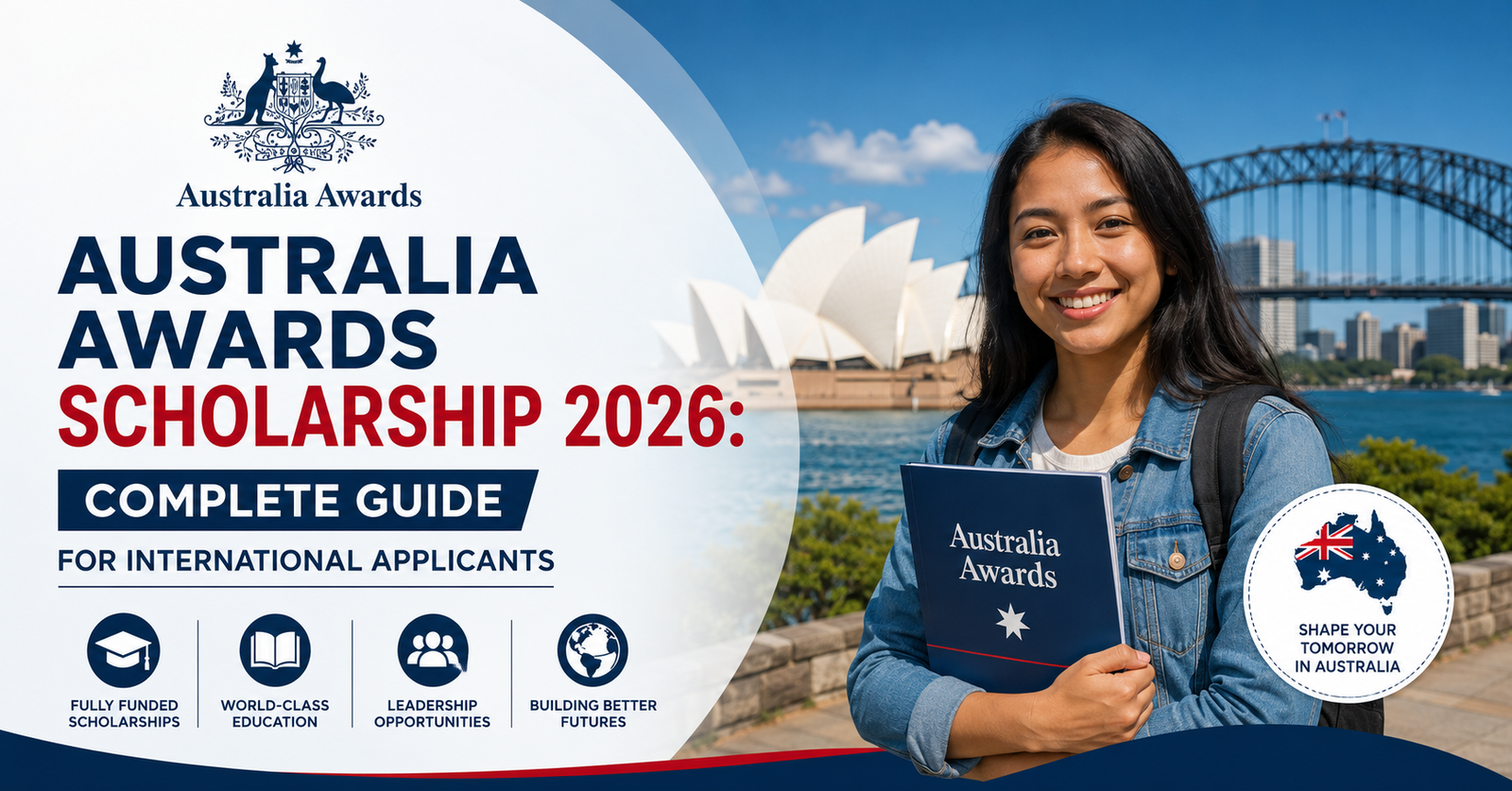
Learn everything about the Australia Awards Scholarship 2026, including eligibility, benefits, application requirements, participating countries, and expert tips to improve your chances of success.
Studying in Australia has long been a dream for thousands of international students seeking a world-class education and valuable career opportunities. However, the cost of tuition, accommodation, and living expenses can make that dream seem out of reach for many talented individuals.
Fortunately, the Australia Awards Scholarship 2026 offers a pathway for outstanding students from eligible developing countries to pursue higher education in Australia without the financial burden that often comes with studying abroad. Funded by the Australian Government, this prestigious scholarship is designed to develop future leaders who can contribute meaningfully to the social and economic development of their home countries after completing their studies.
Unlike many scholarship programs that cover only tuition fees, the Australia Awards Scholarship provides comprehensive financial support. Successful applicants typically receive funding for tuition, return airfare, living expenses, health insurance, academic support, and other essential costs associated with studying in Australia.
Competition for these scholarships is strong, making it important to understand the eligibility criteria, application process, required documentation, and selection expectations before applying.
In this comprehensive guide, you’ll learn everything you need to know about the Australia Awards Scholarship 2026, including eligibility requirements, available benefits, participating countries, fields of study, and practical advice that can help strengthen your application.
What Is the Australia Awards Scholarship?
The Australia Awards Scholarship is an international development initiative funded by the Australian Government. Its primary objective is to strengthen relationships between Australia and partner countries by investing in education, leadership development, and long-term capacity building.
Rather than serving as a general scholarship for students worldwide, the program targets individuals from eligible partner countries who have demonstrated academic ability, leadership potential, and a genuine commitment to improving their communities.
Recipients are expected to return to their home countries after completing their studies and apply the knowledge, technical skills, and professional experience gained in Australia to support national development.
The scholarship supports study at participating Australian universities and Technical and Further Education (TAFE) institutions across a wide range of disciplines aligned with each partner country’s development priorities.
Because of its comprehensive funding package and strong international reputation, the Australia Awards Scholarship is widely regarded as one of the most competitive fully funded scholarship opportunities available to international students.
Key Benefits of the Australia Awards Scholarship 2026
One of the biggest reasons applicants choose the Australia Awards Scholarship is its extensive financial support. Rather than worrying about tuition or living costs, scholars can focus on their academic and professional development.
Successful applicants may receive benefits such as:
Full Tuition Coverage
The scholarship covers the full cost of approved tuition fees for the entire duration of the eligible program.
This allows students to complete their studies without accumulating significant educational debt.
Return Airfare
Recipients usually receive economy-class return flights between their home country and Australia at the beginning and conclusion of their scholarship.
Establishment Allowance
Upon arrival in Australia, scholars generally receive a one-time establishment allowance to assist with initial expenses such as accommodation setup, study materials, and essential household items.
Contribution to Living Expenses (CLE)
The scholarship includes a regular living allowance designed to help cover everyday expenses, including:
- Rent
- Food
- Transportation
- Utilities
- Personal expenses
The exact amount is reviewed periodically and may change over time.
Overseas Student Health Cover (OSHC)
Medical insurance is provided for the duration of the scholarship, helping students access healthcare services while studying in Australia.
Academic Support
Many scholars also benefit from additional academic assistance, including:
- Introductory academic programs
- Research support (where applicable)
- Study skills workshops
- Language support when required
Fieldwork Support
Students whose approved programs require field research may receive additional assistance for eligible academic fieldwork expenses.
Why Is the Australia Awards Scholarship So Competitive?
Every year, thousands of qualified candidates submit applications from eligible countries across Asia, Africa, the Pacific, and the Middle East.
What makes the program particularly competitive is that selection is based on more than academic performance alone.
Selection committees often consider:
- Academic achievement
- Leadership experience
- Professional accomplishments
- Community involvement
- Communication skills
- Long-term development impact
- Commitment to returning home after graduation
Applicants who clearly demonstrate how their education will contribute to national or community development often have a stronger application.
Who Can Apply?
The Australia Awards Scholarship is not open to every country. Instead, eligibility is determined by Australia’s partnerships with specific developing nations.
Applicants generally need to:
- Be a citizen of an eligible participating country.
- Meet the minimum age requirement specified for their country.
- Satisfy the academic requirements for their chosen program.
- Meet English language proficiency requirements where applicable.
- Comply with any country-specific eligibility criteria.
- Intend to return to their home country after completing their scholarship.
Each participating country may have additional requirements based on local priorities.
Eligible Countries
Eligibility varies by region and is determined by the Australian Government’s development partnerships. Countries may change over time, so applicants should always verify the latest list before applying.
Examples of eligible regions include:
Africa
Several African countries participate in the Australia Awards program, with opportunities often focused on sectors such as agriculture, public administration, health, education, climate resilience, and economic development.
Asia
Many South Asian and Southeast Asian countries are eligible, reflecting Australia’s long-standing educational partnerships across the region.
Pacific
The Pacific region represents one of the largest groups of Australia Awards recipients. Scholarships frequently support development in areas such as governance, environmental management, engineering, fisheries, education, and public health.
Middle East
Some countries in the Middle East may also participate under specific development cooperation arrangements.
Because eligibility is country-specific, applicants should carefully review the requirements applicable to their nationality before beginning the application process.
Available Levels of Study
The Australia Awards Scholarship primarily supports higher education programs that contribute directly to national development goals.
Depending on the country and scholarship category, applicants may be eligible for:
Undergraduate Degrees
Some partner countries offer undergraduate scholarship opportunities for priority disciplines.
Master’s Degrees
Master’s programs remain the most common level funded under the Australia Awards Scholarship.
Applicants with professional experience are often encouraged to pursue postgraduate study aligned with their country’s development needs.
Doctoral (PhD) Programs
In selected cases, doctoral research programs may be supported where advanced research capacity is considered a national priority.
Availability varies considerably between participating countries.
Fields of Study
Although the scholarship supports numerous academic disciplines, priority is generally given to programs that address development challenges within participating countries.
Common fields include:
Agriculture
Programs covering sustainable farming, food security, agribusiness, and rural development.
Public Health
Courses related to healthcare management, epidemiology, nursing, disease prevention, and health policy.
Engineering
Engineering remains one of the most sought-after disciplines, including civil, mechanical, electrical, environmental, and infrastructure engineering.
Education
Teacher training, educational leadership, curriculum development, and higher education management.
Environmental Science
Climate change adaptation, biodiversity conservation, renewable energy, and natural resource management.
Economics and Public Policy
Programs focused on governance, financial management, economic planning, and policy implementation.
Information Technology
Digital transformation, cybersecurity, software engineering, data science, and information systems.
Additional priority fields may be available depending on each participating country’s development objectives.
Eligibility Requirements
Meeting the basic eligibility requirements is only the first step. Competitive applicants usually exceed the minimum standards through strong academic records, relevant work experience, and demonstrated leadership.
Typical requirements include:
Citizenship
Applicants must hold citizenship in an eligible participating country.
Residency
Candidates are generally expected to apply from their country of citizenship unless otherwise specified.
Academic Qualifications
Applicants should possess the educational qualifications required for admission into their chosen Australian institution.
Professional Experience
Many postgraduate programs give preference to applicants with relevant professional experience in their field.
Leadership Potential
Evidence of leadership may include:
- Workplace achievements
- Community service
- Volunteer activities
- Professional associations
- Youth initiatives
- Social impact projects
Commitment to National Development
One of the strongest elements of a successful application is a clear explanation of how the applicant intends to use the knowledge gained in Australia to contribute to development in their home country after graduation.
Rather than focusing solely on personal career goals, applicants are encouraged to demonstrate broader social, institutional, or economic impact.
Why Study in Australia?
Australia consistently ranks among the world’s leading destinations for international education, attracting students from diverse cultural and professional backgrounds.
Some of the advantages include:
Globally Recognized Universities
Australian universities are respected for their academic quality, innovative research, and internationally recognized qualifications.
Multicultural Learning Environment
Students have the opportunity to learn alongside peers from around the world, gaining valuable cross-cultural experience that extends beyond the classroom.
Research and Innovation
Many Australian institutions invest heavily in research across science, technology, healthcare, engineering, environmental studies, and business.
Practical Learning
Courses often combine academic theory with practical experience through laboratories, industry projects, internships, and professional placements.
Strong Graduate Outcomes
Graduates of Australian institutions are valued by employers worldwide for their practical skills, critical thinking, and international exposure.
For Australia Awards scholars, studying in Australia also provides opportunities to build professional networks, exchange ideas with experts, and develop leadership skills that can benefit their home communities long after graduation.
Step-by-Step Application Process
Preparing a strong application takes time and careful planning. While the exact requirements may vary slightly depending on your country, the overall process follows a similar structure for most applicants.
Starting early gives you enough time to gather documents, request references, prepare your personal statements, and address any issues before the application deadline.
Step 1: Confirm Your Eligibility
Before investing time in the application, make sure you meet all eligibility requirements for your country.
Review the following carefully:
- Citizenship requirements
- Academic qualifications
- Work experience requirements (if applicable)
- Age restrictions (where applicable)
- English language requirements
- Priority fields of study
- Country-specific conditions
Applying without meeting the minimum eligibility criteria will usually result in your application not being considered.
Step 2: Choose an Eligible Course
Australia Awards Scholarships are intended to support studies that contribute to your country’s development priorities.
When selecting a course, consider:
- Whether it aligns with your professional background
- How it supports your long-term career goals
- Its relevance to your country’s development needs
- Whether the program is offered by an approved Australian institution
Choosing a course simply because it is popular is rarely enough. A well-justified study plan that clearly connects your education to future community or national impact is often more compelling.
Step 3: Prepare Your Documents
One of the most common reasons applications are delayed or rejected is incomplete documentation.
Gather your documents well in advance to allow time for corrections or certification if required.
Typical documents include:
- Valid passport or national identification
- Academic certificates
- Official academic transcripts
- Curriculum Vitae (CV) or résumé
- Professional reference letters
- Academic reference letters (if required)
- Proof of employment
- Personal statement
- Development impact statement
- English language test results (where required)
Some countries may request additional documents, so always check the specific requirements for your application.
Step 4: Submit Your Online Application
Most Australia Awards applications are submitted through the designated online application portal.
When completing your application:
- Answer every question honestly.
- Double-check names and dates.
- Upload clear, legible documents.
- Review your application carefully before submission.
- Submit before the deadline to avoid last-minute technical issues.
Late applications are generally not accepted.
Step 5: Shortlisting and Interviews
Applicants who meet the eligibility requirements and demonstrate strong potential may be shortlisted.
The interview stage allows the selection panel to evaluate:
- Leadership potential
- Motivation for studying in Australia
- Professional achievements
- Communication skills
- Knowledge of development challenges
- Future plans after graduation
Interviews are often competency-based, meaning candidates are expected to provide practical examples from their academic, professional, or community experiences.
Step 6: Final Selection
Successful applicants may receive either a conditional or an unconditional scholarship offer, depending on whether any outstanding requirements remain.
Before departure, selected scholars may also complete pre-departure briefings to help them prepare for life and study in Australia.
Required Documents Checklist
Although documentation requirements differ by country, applicants are commonly expected to provide the following.
Personal Identification
Prepare valid identification documents such as:
- Passport
- National identity card (where accepted)
- Birth certificate (if requested)
Ensure your passport remains valid for the required period.
Academic Documents
Applicants are usually required to submit:
- Degree certificates
- Diplomas
- Official transcripts
- Professional certifications (where relevant)
Documents issued in languages other than English may need certified translations.
Curriculum Vitae (CV)
A professional CV should highlight:
- Educational background
- Employment history
- Leadership experience
- Volunteer work
- Research activities
- Professional achievements
- Training and certifications
Keep the information accurate, well-organized, and relevant to your chosen field of study.
Reference Letters
Strong recommendation letters can strengthen an application by providing insight into your academic abilities, professional performance, and leadership qualities.
References are often expected from:
- Employers
- Supervisors
- Lecturers
- Academic advisors
- Senior professionals familiar with your work
Choose referees who know your abilities well and can provide specific examples rather than generic praise.
Development Impact Statement
This is one of the most important parts of the application.
Rather than focusing solely on personal ambitions, explain:
- The challenges facing your sector or community
- Why additional education is needed
- How your proposed studies will help address those challenges
- The practical impact you hope to make after returning home
A thoughtful, realistic plan often carries more weight than broad or unrealistic claims.
Selection Criteria Explained
The Australia Awards Scholarship evaluates applicants using several criteria, not just academic performance.
Understanding these areas can help you prepare a more balanced application.
Academic Excellence
A strong academic record demonstrates your ability to succeed in a demanding university environment.
While excellent grades are important, selection panels also consider the overall quality and relevance of your education.
Professional Experience
Many successful applicants have relevant work experience connected to their chosen field of study.
Professional achievements may include:
- Project management
- Public service
- Healthcare delivery
- Teaching
- Engineering
- Agricultural development
- Research
- Community programs
Quality of experience is often more important than the number of years worked.
Leadership Potential
Leadership is one of the defining characteristics sought by the Australia Awards program.
Evidence may include:
- Managing workplace initiatives
- Leading community organizations
- Organizing volunteer projects
- Mentoring colleagues
- Professional associations
- Youth leadership activities
Leadership can be demonstrated through influence, initiative, and measurable outcomes—not just job titles.
Commitment to Returning Home
Australia Awards Scholarships are designed to build capacity in participating countries.
Applicants should clearly explain how they intend to use their education after returning home.
Strong examples include plans to:
- Improve public services
- Strengthen healthcare systems
- Expand educational opportunities
- Develop infrastructure
- Support environmental sustainability
- Encourage innovation
- Build institutional capacity
Your goals should be practical, specific, and connected to your country’s development priorities.
English Language Requirements
Many Australian universities require evidence of English language proficiency.
Accepted tests commonly include:
- IELTS Academic
- TOEFL iBT
- PTE Academic
- Other approved English language qualifications accepted by the admitting institution
The required score depends on the university and the chosen program.
Some applicants may qualify for exemptions based on their educational background or country-specific arrangements.
Always confirm the language requirements for both the scholarship and your selected institution.
Australia Awards Scholarship 2026 Timeline
Exact dates differ by country, but the application process generally follows this sequence.
Application Opening
Scholarship announcements are typically published several months before the deadline, allowing applicants time to prepare.
Application Deadline
Applicants should submit all required documents before the published closing date. Waiting until the final day increases the risk of technical issues or incomplete submissions.
Assessment Stage
Eligible applications are reviewed to determine whether they meet academic, professional, and development-focused selection criteria.
Interviews
Shortlisted candidates are invited to participate in interviews and, in some cases, additional assessments.
Scholarship Offers
Successful applicants receive scholarship offers after the assessment process is completed.
Pre-Departure Preparation
Selected scholars participate in orientation activities before traveling to Australia to begin their studies.
Expert Tips to Increase Your Chances of Success
Competition for Australia Awards Scholarships is high, but thoughtful preparation can help you present a stronger application.
Start Early
Give yourself enough time to gather documents, contact referees, and revise your application before the deadline.
Research Your Chosen Course
Understand how the program aligns with your professional background and your country’s development priorities. Demonstrating this connection can strengthen your study plan.
Highlight Measurable Achievements
Instead of simply listing responsibilities, explain the results you achieved.
For example:
- Projects completed
- Communities served
- Policies implemented
- Improvements introduced
- Teams managed
- Research outcomes
Concrete examples help demonstrate your impact.
Demonstrate Leadership Through Action
Leadership is not limited to management positions.
You can also highlight experiences such as:
- Organizing community initiatives
- Mentoring others
- Coordinating volunteer activities
- Leading professional groups
- Solving workplace challenges
Describe the actions you took and the outcomes you achieved.
Write a Clear Development Impact Statement
Your statement should answer questions such as:
- What problem are you trying to solve?
- Why is this issue important?
- How will your education help address it?
- What practical steps will you take after returning home?
A focused and realistic plan is often more persuasive than broad promises.
Proofread Carefully
Small errors can distract from an otherwise strong application.
Before submitting:
- Check spelling and grammar.
- Ensure dates are consistent.
- Confirm document names match their contents.
- Verify that every required document has been uploaded.
- Ask a trusted colleague or mentor to review your application.
A polished application reflects attention to detail and professionalism.
Common Mistakes to Avoid
Even highly qualified applicants can weaken their chances by making avoidable mistakes.
Some of the most common include:
Applying Without Meeting Eligibility Requirements
Always confirm that you satisfy the requirements for your country before beginning the application.
Submitting Incomplete Documents
Missing transcripts, unsigned forms, or outdated identification documents can delay or disqualify an application.
Writing Generic Personal Statements
Avoid using vague statements that could apply to any scholarship. Instead, explain your goals with specific examples and show how your proposed studies connect to your country’s development priorities.
Ignoring Instructions
Read every guideline carefully and follow formatting, certification, and submission requirements exactly as instructed.
Waiting Until the Deadline
Technical issues, internet disruptions, or missing documents can prevent successful submission if you leave everything until the final day.
Submitting early provides time to resolve unexpected problems.
Detailed Financial Benefits Breakdown
One of the biggest advantages of the Australia Awards Scholarship is its comprehensive funding package. While the exact benefits may vary depending on the recipient’s program and individual circumstances, the scholarship is designed to reduce many of the financial barriers associated with studying abroad.
Below is an overview of the types of support that successful applicants may receive.
Full Tuition Fees
Recipients are generally awarded full tuition coverage for the approved duration of their academic program. This means scholars can concentrate on their studies without the burden of paying tuition costs.
Return Air Travel
Successful applicants are typically provided with economy-class airfare between their home country and Australia at the beginning and end of the scholarship period.
Establishment Allowance
Moving to another country involves many initial expenses. To help with this transition, scholars may receive a one-time establishment allowance that can assist with costs such as:
- Temporary accommodation
- Basic household items
- Study materials
- Transportation upon arrival
Contribution to Living Expenses (CLE)
Recipients usually receive a regular living allowance intended to help cover day-to-day expenses, including:
- Accommodation
- Food and groceries
- Public transportation
- Utilities
- Personal necessities
The allowance is reviewed periodically and may change over time to reflect living costs.
Overseas Student Health Cover (OSHC)
Maintaining access to healthcare is an important part of studying overseas. The scholarship generally includes Overseas Student Health Cover for the duration of the approved study program.
Academic and Pastoral Support
Many institutions offer additional support services to Australia Awards scholars, including:
- Academic orientation
- Study skills workshops
- Student mentoring
- Career guidance
- Well-being and counselling services
- Learning support where appropriate
These services help scholars adapt to a new academic and cultural environment.
Research and Fieldwork Support
For eligible postgraduate programs requiring approved fieldwork or research activities, additional financial assistance may be available, subject to scholarship conditions.
Life as an Australia Awards Scholar
Receiving an Australia Awards Scholarship is about more than earning a degree. Scholars also become part of a diverse international community of professionals, researchers, and future leaders.
Many recipients benefit from opportunities to:
- Build international professional networks
- Participate in leadership development activities
- Collaborate on research and innovation projects
- Experience Australia’s multicultural society
- Develop communication and cross-cultural skills
- Engage with alumni networks after graduation
These experiences often continue to provide professional value long after the scholarship has ended.
Frequently Asked Questions (FAQs)
Is the Australia Awards Scholarship fully funded?
Yes. The scholarship is widely regarded as a fully funded program because it generally covers tuition fees and provides financial assistance for several major study-related expenses, subject to the terms of the award.
Who can apply?
Applications are typically open to citizens of eligible partner countries. Eligibility requirements differ by country, so applicants should review the criteria applicable to their nationality before applying.
Can undergraduate students apply?
In some participating countries, undergraduate study may be supported. However, many Australia Awards Scholarships primarily fund postgraduate study, particularly master’s degree programs. Availability depends on country-specific priorities.
Do I need work experience?
Some scholarship categories and postgraduate programs may require relevant professional experience. Requirements vary depending on the applicant’s country and chosen course.
Is an English language test always required?
Not always. Some applicants may qualify for exemptions based on scholarship rules or university admission policies. Where required, applicants should meet the English language standards specified by both the scholarship and their chosen institution.
Can I work while studying in Australia?
International students may be permitted to work in accordance with the conditions of their Australian student visa. Applicants should always review the current visa conditions that apply to their circumstances before accepting employment.
Can I stay in Australia after graduation?
Australia Awards Scholarships are development-focused. Scholars are generally expected to return to their home countries after completing their studies so they can apply the knowledge and skills gained through the program in support of local or national development.
Final Thoughts
The Australia Awards Scholarship 2026 remains one of the most respected international scholarship programs available to students from eligible partner countries. Beyond financial support, it offers an opportunity to develop professional expertise, strengthen leadership skills, and build meaningful international connections.
Success in the application process depends on careful preparation, attention to detail, and a clear understanding of the scholarship’s purpose. Applicants who present a well-structured application, demonstrate leadership potential, and explain how their studies will contribute to development in their home country are often better positioned for consideration.
If you plan to apply, begin preparing well before the application deadline. Gather your documents early, seek constructive feedback on your personal statements, and ensure every section of your application accurately reflects your qualifications, experience, and future goals.
A thoughtful and authentic application will always stand out more than one that relies on generic language or unsupported claims.
Key Takeaways
- The Australia Awards Scholarship is funded by the Australian Government.
- It supports students from eligible partner countries.
- The scholarship generally provides comprehensive financial support, including tuition and living assistance.
- Applicants are assessed on academic achievement, leadership potential, professional experience, and their commitment to contributing to development in their home country.
- Careful preparation, complete documentation, and a well-written development impact statement can strengthen an application.
- Starting early gives applicants more time to prepare a competitive submission.


 Dynamo