 Dynamo
Germany has positioned itself as one of the world’s leading destinations for renewable energy innovation. As the country accelerates its transition toward clean power, employers are investing heavily in skilled professionals who can support large-scale solar, wind, hydrogen, battery storage, and smart grid projects. For qualified international professionals, this demand presents an opportunity to build a rewarding career while benefiting from competitive salaries and long-term residency pathways.
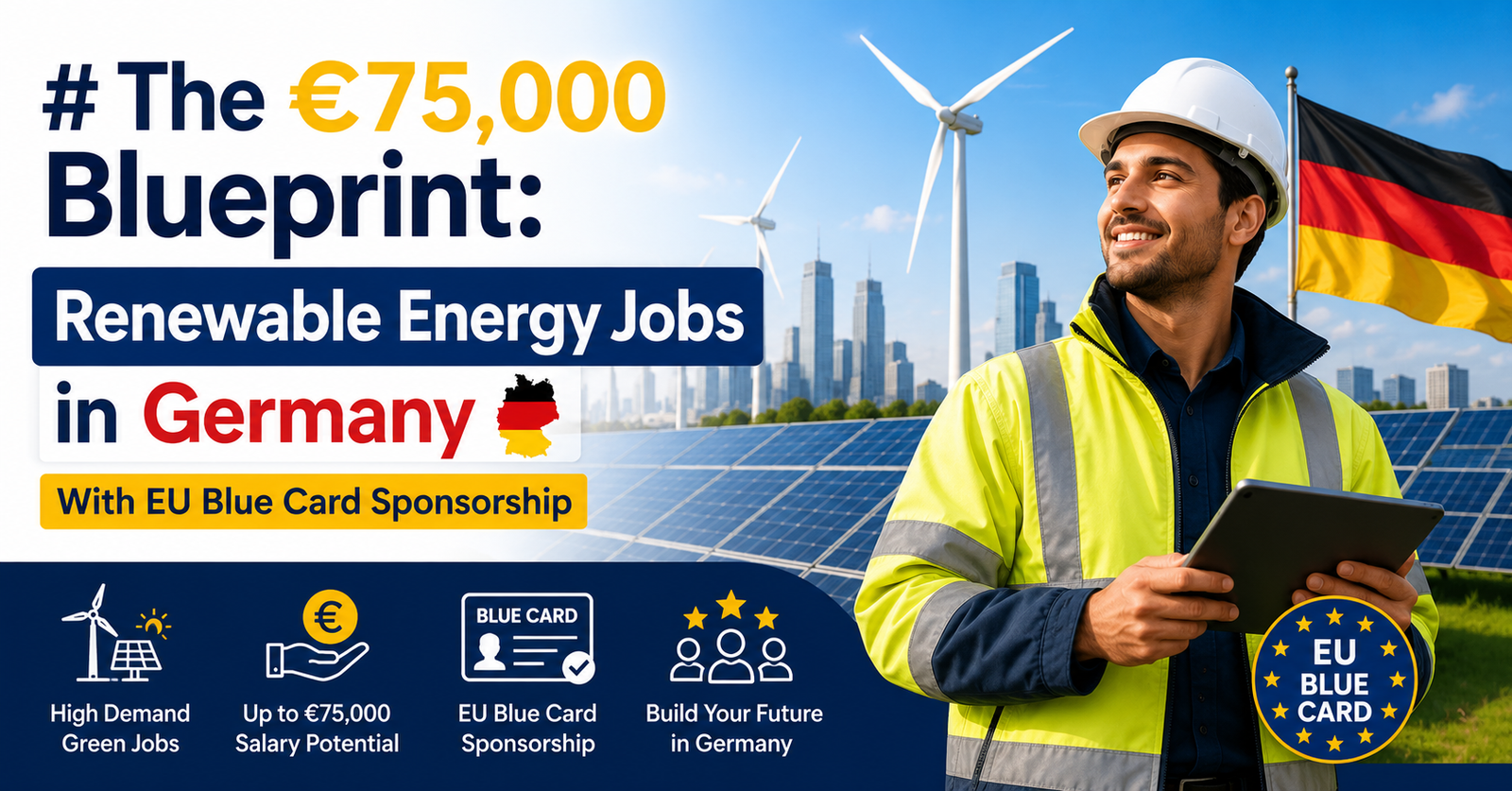
Among the most attractive opportunities are renewable energy jobs in Germany with EU Blue Card sponsorship. Many experienced engineers, project managers, IT specialists, environmental experts, and technical professionals earn salaries approaching or exceeding €75,000 per year, depending on their qualifications, experience, employer, and location.
If you are planning to relocate for work, understanding how Germany’s labour market operates can significantly improve your chances of securing a position with visa sponsorship. This guide explains the qualifications employers seek, industries experiencing the strongest growth, and practical steps that can help you prepare a competitive application.
Why Germany Leads Europe’s Renewable Energy Revolution
Germany has spent decades investing in renewable energy infrastructure. Government policies supporting clean electricity, offshore wind farms, hydrogen technology, and sustainable transportation continue to drive hiring across both public and private sectors.
Several factors contribute to Germany’s strong demand for international talent:
- Expansion of offshore and onshore wind projects
- Continued growth in commercial and residential solar installations
- Development of hydrogen production facilities
- Modernisation of electricity transmission networks
- Increasing investment in battery storage technologies
- Industrial decarbonisation initiatives
- Digital transformation of energy systems
Because many organisations struggle to fill specialised technical positions locally, employers increasingly recruit qualified professionals from around the world.
This demand has created attractive opportunities for candidates who possess recognised qualifications, relevant work experience, and strong technical skills.
Understanding the €75,000 Salary Benchmark
The title of this guide highlights €75,000 because it represents a salary level that many experienced renewable energy professionals can achieve—not a guaranteed income for every applicant.
Actual salaries depend on several factors, including:
- Education
- Years of experience
- Technical specialisation
- Employer size
- Industry sector
- Geographic location
- Leadership responsibilities
Professionals working in engineering management, energy consulting, offshore wind operations, grid infrastructure, software engineering, hydrogen technology, and project management often earn salaries within or above this range.
Entry-level professionals generally begin with lower compensation packages while building experience.
What Is the EU Blue Card?
The EU Blue Card is a residence permit designed to attract highly qualified professionals from countries outside the European Union.
It allows eligible workers to live and work in Germany when they have:
- A qualifying university degree or recognised professional qualification
- An employment contract or binding job offer
- A salary meeting the applicable eligibility requirements
- Employment aligned with their qualifications
The EU Blue Card offers several advantages, including:
- Legal employment in Germany
- Opportunities for long-term residence
- Potential pathways toward permanent settlement if eligibility requirements are met
- Mobility benefits under applicable regulations
- Family reunification options under German immigration rules
Eligibility requirements, including salary thresholds and qualification recognition, may change over time. Applicants should always review the latest requirements through official German government resources before submitting an application.
Why Renewable Energy Employers Sponsor International Talent
Germany’s energy transition has increased demand across numerous technical disciplines.
Many employers report shortages in specialised occupations, particularly where advanced engineering, software development, data analysis, environmental science, or industrial automation expertise is required.
Rather than limiting recruitment to domestic candidates, companies frequently expand their hiring internationally to access experienced professionals capable of contributing to complex infrastructure projects.
International recruitment is particularly common for roles requiring expertise in:
- Electrical engineering
- Mechanical engineering
- Civil engineering
- Power systems
- Renewable energy technologies
- Digital energy platforms
- Automation
- Artificial intelligence
- Data engineering
- Environmental compliance
Candidates who demonstrate relevant experience and strong communication skills often become competitive applicants for sponsored positions.
Renewable Energy Sectors Experiencing Strong Growth
Germany’s clean energy industry extends far beyond wind turbines and solar panels.
The sector includes multiple high-growth industries that regularly seek skilled professionals.
1. Wind Energy
Germany remains one of Europe’s largest wind energy markets.
Professionals may work in:
- Offshore wind development
- Turbine engineering
- Maintenance planning
- Grid integration
- Marine construction
- Asset management
- Operations and maintenance
Experienced engineers with offshore expertise are often among the highest-paid professionals within the renewable energy sector.
2. Solar Energy
Commercial and utility-scale solar installations continue expanding across Germany.
Common positions include:
- Solar design engineers
- Project coordinators
- Electrical engineers
- Installation supervisors
- Quality assurance specialists
- Procurement managers
As businesses increasingly adopt renewable energy solutions, demand continues to grow for professionals who understand photovoltaic systems and project delivery.
3. Green Hydrogen
Hydrogen has become a major focus of Germany’s long-term energy strategy.
This rapidly evolving sector requires professionals specialising in:
- Chemical engineering
- Process engineering
- Mechanical engineering
- Industrial automation
- Pipeline infrastructure
- Energy storage
- Safety management
Because hydrogen technology remains a specialised field, experienced professionals may find attractive career opportunities.
4. Battery Storage
Reliable energy storage is essential for balancing renewable electricity generation.
Employers recruit specialists in:
- Battery engineering
- Electrical systems
- Software development
- Data analytics
- Manufacturing
- Product testing
- Research and development
As battery technologies continue advancing, demand for experienced professionals is expected to remain strong.
5. Smart Grid Technology
Modern electricity networks increasingly rely on digital technologies.
Companies seek professionals capable of improving grid efficiency through:
- Artificial intelligence
- Machine learning
- Cybersecurity
- Cloud computing
- Data engineering
- Grid automation
- Digital infrastructure
Technology professionals with experience in the energy sector often find opportunities in this rapidly expanding field.
High-Paying Renewable Energy Jobs in Germany
Several occupations consistently offer competitive salaries for experienced professionals.
Examples include:
Renewable Energy Project Manager
Project managers oversee planning, budgeting, scheduling, stakeholder coordination, and project delivery from concept through completion.
Typical responsibilities include:
- Managing project timelines
- Coordinating engineering teams
- Monitoring budgets
- Ensuring regulatory compliance
- Communicating with clients
Strong leadership skills combined with technical knowledge are highly valued.
Electrical Engineer
Electrical engineers design, test, and maintain systems supporting renewable energy generation and distribution.
Common responsibilities include:
- Power system design
- Grid integration
- Equipment testing
- Electrical modelling
- System optimisation
Professionals experienced in renewable energy infrastructure often remain in high demand.
Mechanical Engineer
Mechanical engineers contribute to wind turbines, industrial equipment, hydrogen systems, and manufacturing facilities.
Responsibilities frequently include:
- Equipment design
- Mechanical analysis
- Reliability improvements
- Performance optimisation
- Technical documentation
Employers often seek candidates with practical project experience.
Energy Consultant
Energy consultants help businesses improve efficiency while transitioning toward sustainable operations.
Responsibilities may include:
- Energy audits
- Sustainability planning
- Carbon reduction strategies
- Financial analysis
- Regulatory guidance
Consulting roles frequently combine engineering knowledge with business strategy.
Software Engineer
Renewable energy increasingly depends on sophisticated software platforms.
Software engineers may develop systems supporting:
- Smart grids
- Energy monitoring
- Predictive maintenance
- Artificial intelligence
- Asset management
- Digital twins
- Data analytics
Technology professionals continue to play an increasingly important role within Germany’s renewable energy ecosystem.
Skills That Employers Value Most
Although technical qualifications remain essential, employers also evaluate practical workplace skills.
Some of the most sought-after competencies include:
Technical Skills
- Power systems engineering
- Solar photovoltaic systems
- Wind turbine technologies
- SCADA systems
- Grid modelling
- AutoCAD
- MATLAB
- Python
- Data analytics
- Industrial automation
- GIS software
Professional Skills
- Project management
- Leadership
- Problem-solving
- Communication
- Risk management
- Time management
- Cross-cultural collaboration
- Stakeholder engagement
- Continuous learning
Candidates who combine technical expertise with strong interpersonal skills often stand out during recruitment processes.
Is German Language Knowledge Required?
One of the most common questions international applicants ask is whether fluency in German is necessary.
The answer depends on the employer and the role.
Many multinational organisations operate primarily in English, especially within engineering, software development, research, and international project management. In these environments, strong English proficiency may be sufficient for certain positions.
However, learning German can still provide significant advantages. It may broaden the range of roles you can apply for, improve workplace communication, support career progression, and make daily life in Germany easier.
Even achieving an intermediate level of German can strengthen your application and demonstrate a commitment to integrating into the local professional environment.
The €75,000 Blueprint: A Step-by-Step Roadmap
Landing a well-paid renewable energy job in Germany is rarely about luck. Successful candidates typically follow a structured approach that combines the right qualifications, targeted job searching, and careful preparation for the German recruitment process.
The following blueprint outlines practical steps that can help improve your chances of securing a position that may qualify for EU Blue Card sponsorship.
Step 1: Identify High-Demand Renewable Energy Roles
Instead of applying for every available vacancy, focus on occupations that consistently experience skill shortages.
Examples include:
- Renewable Energy Project Manager
- Electrical Engineer
- Mechanical Engineer
- Civil Engineer
- Power Systems Engineer
- Grid Integration Specialist
- Wind Turbine Engineer
- Solar PV Design Engineer
- Hydrogen Process Engineer
- Energy Storage Engineer
- Environmental Consultant
- Sustainability Consultant
- Automation Engineer
- SCADA Engineer
- Software Engineer
- Data Engineer
- AI Engineer for Smart Energy
- GIS Specialist
- Procurement Manager
- Quality Assurance Engineer
Targeting roles that closely match your education and experience generally results in stronger applications than applying broadly to unrelated positions.
Step 2: Ensure Your Qualifications Are Recognised
German employers often place significant value on recognised academic and professional qualifications.
Depending on the role, employers may request:
- Bachelor’s degree
- Master’s degree
- Professional engineering qualification
- Industry certifications
- Technical licences
- Portfolio of completed projects
If your qualification was earned outside Germany, it may need to be recognised under the applicable procedures before or during the employment process.
Having complete academic transcripts, certificates, and employment references prepared in advance can help reduce delays.
Step 3: Build Experience in Renewable Energy
Candidates with direct industry experience generally have a competitive advantage.
Relevant experience may include work involving:
- Solar installations
- Wind farms
- Electrical infrastructure
- Grid systems
- Industrial automation
- Power generation
- Battery technology
- Environmental compliance
- Smart energy platforms
If you are transitioning from another engineering field, highlight transferable skills such as project delivery, equipment design, maintenance, systems integration, or industrial safety.
Employers often value practical experience that demonstrates your ability to solve technical problems in real-world environments.
Step 4: Develop In-Demand Technical Skills
The renewable energy industry continues to evolve rapidly, making continuous learning an important part of career development.
Skills that frequently appear in job descriptions include:
Engineering Software
- AutoCAD
- SolidWorks
- MATLAB
- ETAP
- PVSyst
Programming
- Python
- SQL
- Java
- C++
- JavaScript
Data Skills
- Power BI
- Tableau
- Excel
- Data visualisation
- Predictive analytics
Cloud Technologies
- Microsoft Azure
- Amazon Web Services (AWS)
- Google Cloud
Project Management
- Agile methodologies
- Scrum
- Risk management
- Budget planning
- Stakeholder communication
Professional certifications and evidence of ongoing learning can strengthen your application, particularly in competitive fields.
Step 5: Prepare a German-Style CV
Your CV is often the first impression you make on a recruiter.
A strong German-style CV is typically:
- Clear and well organised
- Focused on achievements rather than responsibilities
- Free of spelling and grammar errors
- Tailored to the specific role
- Easy to scan quickly
Include measurable accomplishments whenever possible.
For example:
Instead of:
“Managed renewable energy projects.”
Consider:
“Coordinated the delivery of five commercial solar projects valued at over €8 million, completed on schedule and within budget.”
Quantifiable achievements help demonstrate the impact of your work.
Step 6: Tailor Every Job Application
Avoid sending identical applications to multiple employers.
Recruiters can often identify generic applications quickly.
Before applying:
- Read the job description carefully.
- Match your experience to the employer’s requirements.
- Highlight relevant technical skills.
- Mention industry certifications where applicable.
- Demonstrate knowledge of the company and its projects.
A tailored application often performs better than a generic one.
Where to Find Renewable Energy Jobs in Germany
Several types of employers recruit international professionals.
These include:
Renewable Energy Developers
Companies involved in designing and delivering renewable energy projects often recruit engineers, project managers, planners, and technical specialists.
Utility Companies
Electricity providers continue investing in renewable generation and grid modernisation.
Opportunities may include:
- Grid engineering
- Asset management
- Operations
- Infrastructure planning
- Digital energy solutions
Engineering Consultancies
Consultancies support governments, utilities, and private developers on large infrastructure projects.
They frequently recruit specialists in:
- Environmental assessment
- Engineering design
- Project delivery
- Sustainability
- Regulatory compliance
Manufacturing Companies
Manufacturers producing renewable energy equipment often hire professionals in:
- Mechanical engineering
- Quality assurance
- Supply chain management
- Production engineering
- Research and development
Technology Companies
Digital transformation has created demand for software professionals developing solutions for:
- Smart grids
- Renewable energy analytics
- Artificial intelligence
- Industrial automation
- Cybersecurity
Does Every Employer Offer Visa Sponsorship?
No.
Some employers recruit only candidates who already have work authorisation.
Others are willing to sponsor qualified international professionals when they cannot fill specialised positions locally.
When reviewing vacancies, pay attention to wording such as:
- International applicants welcome
- Visa sponsorship available
- EU Blue Card eligible
- Relocation assistance
- Work permit support
If this information is not included in the job advertisement, you can politely ask during the recruitment process whether sponsorship is available for successful candidates.
Preparing for Interviews
Technical interviews often assess both your knowledge and your approach to solving problems.
You may be asked about:
- Previous renewable energy projects
- Engineering principles
- Safety procedures
- Project management experience
- Team collaboration
- Technical software
- Communication skills
Many employers also use behavioural interview questions.
Examples include:
- Describe a challenging engineering project.
- Tell us about a difficult deadline.
- How do you manage competing priorities?
- Describe a time you solved an unexpected technical issue.
Preparing structured examples based on your own experience can help you respond clearly and confidently.
Common Documents Required
Although requirements vary by employer, applicants are commonly asked to provide:
- Professional CV
- Cover letter
- Degree certificates
- Academic transcripts
- Professional certifications
- Passport copy
- Employment references
- Portfolio (where relevant)
Keeping digital copies organised can make it easier to respond promptly when opportunities arise.
Relocation Considerations
Receiving a job offer is only one part of the relocation process.
Planning ahead for practical matters can make the transition smoother.
Areas to consider include:
Housing
Rental markets in larger German cities can be competitive. Research accommodation options early and understand typical rental costs in your destination.
Health Insurance
Health insurance is generally required for employees in Germany. Employers often provide information about available options as part of the onboarding process.
Banking
Opening a local bank account may be necessary for salary payments and everyday financial transactions.
Taxation
Germany operates a structured tax system. Understanding how income tax and social contributions affect your take-home pay can help you budget more effectively.
Public Transport
Many cities offer reliable public transport networks, making it possible to commute without owning a car.
Challenges International Applicants May Face
Relocating to another country is a significant step, and applicants should be prepared for potential challenges.
Common considerations include:
- Competition for highly sought-after roles
- Recognition of foreign qualifications
- Adapting to a new workplace culture
- Learning German
- Relocating family members
- Securing accommodation
- Completing administrative procedures
Planning ahead and staying informed can make these challenges more manageable.
Tips to Improve Your Chances of Success
If you’re aiming for a renewable energy position with EU Blue Card sponsorship, consider the following strategies:
- Build a strong portfolio showcasing completed projects.
- Earn recognised technical certifications relevant to your field.
- Tailor your CV and cover letter for each application.
- Continue developing your technical and digital skills.
- Strengthen your English communication skills and, where possible, learn German.
- Stay informed about developments in the renewable energy sector.
- Apply consistently rather than relying on a single opportunity.
- Prepare thoroughly for technical and behavioural interviews.
- Maintain a professional online presence, particularly on career networking platforms.
- Be realistic about salary expectations while recognising the value of your skills and experience.
A thoughtful, well-prepared approach can help distinguish your application in a competitive job market.
Common Mistakes to Avoid When Applying for Renewable Energy Jobs in Germany
Even highly qualified professionals can reduce their chances of success by making avoidable mistakes during the application process. Being aware of these common pitfalls can help you present a stronger application and improve your overall job search strategy.
1. Sending Generic Applications
Recruiters often review dozens—or even hundreds—of applications for a single vacancy. A generic CV and cover letter that do not address the specific role are unlikely to stand out.
Instead, tailor each application by highlighting the experience, technical skills, and achievements that are most relevant to the position.
2. Ignoring the Job Requirements
Carefully review each job description before applying. If a role requires specific qualifications, certifications, or years of experience, explain how your background aligns with those requirements. If you do not meet every criterion, focus on transferable skills and relevant accomplishments rather than exaggerating your experience.
3. Overlooking Soft Skills
Technical expertise is essential, but employers also value professionals who communicate effectively, work well in teams, and adapt to changing project requirements. Demonstrating these qualities through real examples can strengthen your application.
4. Neglecting Language Development
While many multinational companies use English in the workplace, learning German can broaden your employment opportunities and support long-term career growth. Even basic or intermediate language skills may be viewed positively by employers.
5. Failing to Research the Employer
Before attending an interview, learn about the company’s renewable energy projects, values, and areas of expertise. Demonstrating genuine interest in the organisation can leave a positive impression.
6. Providing Inaccurate Information
Always present truthful information regarding your qualifications, work history, certifications, and technical skills. Employers may verify credentials during the recruitment process.
Frequently Asked Questions (FAQ)
Can international professionals apply for renewable energy jobs in Germany?
Yes. Many German employers recruit internationally for specialised positions where there is demand for skilled professionals. Eligibility depends on the employer’s requirements, your qualifications, and the applicable immigration rules.
Is visa sponsorship guaranteed?
No. Visa sponsorship is determined by individual employers and the circumstances of each vacancy. Some employers provide sponsorship or support for eligible candidates, while others recruit only applicants who already have work authorisation.
Does every renewable energy job pay €75,000?
No. Salaries vary based on experience, qualifications, responsibilities, employer, industry, and location. The €75,000 figure represents a potential salary level for many experienced professionals rather than a guaranteed income.
Which qualifications are most valuable?
Qualifications depend on the role, but employers commonly seek degrees in areas such as:
- Electrical Engineering
- Mechanical Engineering
- Civil Engineering
- Environmental Engineering
- Computer Science
- Energy Engineering
- Data Science
- Environmental Science
Relevant certifications, industry experience, and project achievements can also strengthen an application.
Is previous renewable energy experience essential?
Not always. Professionals from related industries—such as construction, manufacturing, utilities, automation, software development, or infrastructure—may possess transferable skills that are valuable in renewable energy projects.
Can family members relocate with an EU Blue Card holder?
Depending on the applicable immigration regulations and individual circumstances, eligible family members may be able to join a Blue Card holder in Germany. Applicants should review the latest official guidance before making relocation plans.
How long does the recruitment process usually take?
Recruitment timelines vary by employer. Some organisations complete the hiring process within a few weeks, while others may require several months, particularly for highly specialised or senior roles.
Final Thoughts
Germany’s renewable energy sector continues to create opportunities for skilled professionals who can contribute to the country’s transition toward cleaner and more sustainable energy systems. Engineers, project managers, software developers, environmental specialists, and technical experts remain in demand across a wide range of industries.
For qualified international candidates, positions that offer competitive salaries and may support EU Blue Card eligibility can provide a pathway to building a long-term career in one of Europe’s most innovative economies. Success, however, depends on more than submitting applications. Careful preparation, relevant experience, continuous learning, and a tailored approach to each opportunity can significantly improve your prospects.
Rather than focusing solely on salary, consider the broader value of a role, including professional development, career progression, workplace culture, and long-term growth. By investing in your skills and presenting a well-prepared application, you can place yourself in a stronger position to compete for opportunities within Germany’s expanding renewable energy industry.
Key Takeaways
- Germany continues to invest heavily in renewable energy infrastructure and clean technology.
- Experienced professionals in engineering, technology, and project management may earn salaries approaching or exceeding €75,000, depending on the role and employer.
- The EU Blue Card provides an immigration pathway for eligible highly qualified professionals who meet the relevant requirements.
- Tailored applications, recognised qualifications, and practical experience improve your chances of securing interviews.
- Continuous professional development and language skills can enhance long-term career opportunities.
- Always rely on official government guidance and employer information when making immigration or employment decisions.


 Dynamo