 Dynamo
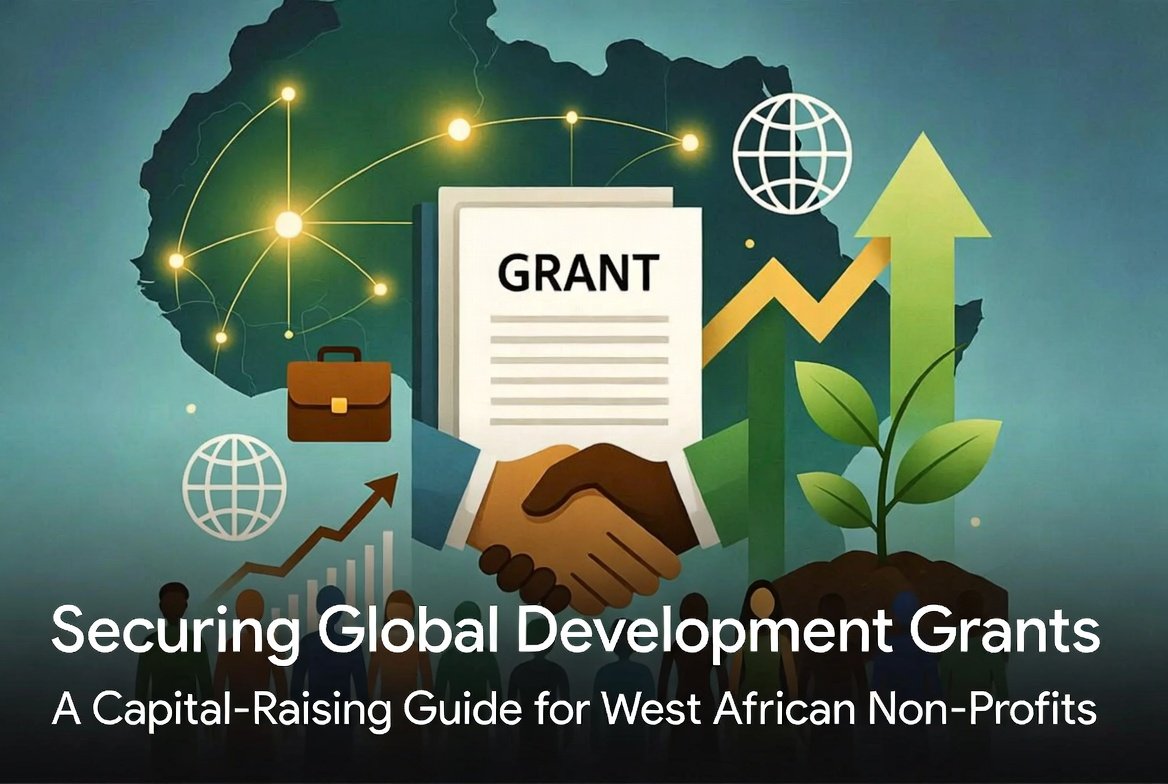
Learn how West African non-profits can secure global development grants through strategic fundraising, compelling proposals, donor engagement, compliance, and sustainable funding practices.
Introduction
Across West Africa, non-profit organizations are making a meaningful impact in education, healthcare, agriculture, environmental conservation, youth empowerment, women’s economic inclusion, technology, humanitarian relief, and community development. Yet even the most innovative organizations often struggle with one common challenge—raising enough capital to sustain and expand their work.
Global development grants offer one of the most significant funding opportunities for non-profits operating across countries such as Nigeria, Ghana, Sierra Leone, Liberia, Senegal, The Gambia, Benin, Togo, Côte d’Ivoire, Mali, Niger, Guinea, Burkina Faso, and Cabo Verde. International donors invest billions of dollars each year to support projects that improve livelihoods, strengthen institutions, promote sustainable development, and advance the United Nations Sustainable Development Goals (SDGs).
However, securing these grants is rarely a matter of luck. Competition is intense, donor expectations are high, and funding decisions are based on evidence, transparency, measurable impact, and organizational credibility. Many promising organizations miss out because they submit weak proposals, fail to meet eligibility requirements, or lack the systems that grant-makers expect.
The encouraging news is that these challenges can be overcome. Whether your organization is newly established or has years of community experience, thoughtful planning, sound governance, and effective fundraising practices can significantly improve your chances of securing international funding.
This guide explains the essential steps involved in identifying funding opportunities, preparing your organization, writing compelling proposals, managing donor relationships, and building long-term financial sustainability. The strategies discussed are suitable for community-based organizations (CBOs), registered non-governmental organizations (NGOs), charitable foundations, faith-based organizations, and social impact organizations throughout West Africa.
Understanding Global Development Grants
Global development grants are financial awards provided by governments, philanthropic foundations, international organizations, corporations, and multilateral agencies to support projects that create measurable social impact.
Unlike loans, grants generally do not require repayment, provided recipients comply with the agreed terms, budgets, reporting requirements, and project objectives.
Most grant-makers focus on initiatives that address pressing development challenges such as:
- Education
- Public health
- Agriculture and food security
- Climate resilience
- Gender equality
- Economic empowerment
- Child protection
- Human rights
- Renewable energy
- Water and sanitation
- Digital inclusion
- Governance and accountability
- Entrepreneurship
- Skills development
- Disaster response
Funding may support projects lasting several months or extend over multiple years, depending on the donor’s priorities and available resources.
Why Global Grants Matter for West African Non-Profits
Many organizations rely heavily on donations from local communities. While community support remains valuable, it often cannot sustain large-scale programmes or long-term development initiatives.
International development grants can provide resources to:
- Expand community programmes
- Hire qualified staff
- Purchase equipment
- Build organizational capacity
- Conduct research
- Improve monitoring and evaluation
- Develop innovative pilot projects
- Reach underserved communities
- Improve accountability systems
- Scale successful interventions
More importantly, receiving funding from respected international donors can strengthen an organization’s reputation, making it easier to attract additional funding from other partners.
Grant funding also encourages organizations to adopt stronger governance structures, improve financial management, and implement more rigorous project monitoring—all of which contribute to long-term sustainability.
The Current Funding Landscape
Global development funding continues to evolve as donors respond to changing humanitarian, economic, and environmental priorities.
Today, many donors prioritize projects that demonstrate:
Local Leadership
International partners increasingly seek organizations that are deeply rooted within the communities they serve. Local knowledge enables more effective programme design and implementation.
Rather than imposing external solutions, donors now recognize that community-led organizations often achieve more sustainable outcomes because they understand local cultures, languages, and priorities.
Measurable Impact
Grant-makers want evidence that their investments produce tangible results.
Instead of broad promises, successful applicants demonstrate outcomes using indicators such as:
- Number of beneficiaries served
- School attendance improvements
- Maternal health outcomes
- Employment created
- Household income growth
- Agricultural productivity
- Access to clean water
- Environmental restoration
- Business creation
- Digital literacy improvements
Organizations capable of collecting reliable data often stand out during grant evaluations.
Innovation
Innovation does not always involve advanced technology.
Many donors value practical, cost-effective solutions that address longstanding development challenges in creative ways.
Examples include:
- Mobile healthcare delivery
- Community-based agricultural extension
- Digital financial inclusion
- Renewable energy solutions
- Youth entrepreneurship programmes
- Climate-smart farming
- Online vocational training
- Community savings initiatives
Innovation demonstrates that an organization is actively adapting to changing needs.
Sustainability
Donors increasingly ask an important question:
“What happens after the grant ends?”
Organizations that depend entirely on donor funding may struggle to convince funders that projects will continue after external support ends.
Successful applicants typically present sustainability strategies involving:
- Community ownership
- Local partnerships
- Government collaboration
- Income-generating activities
- Volunteer engagement
- Cost recovery where appropriate
- Diversified fundraising
These strategies reassure donors that project benefits will extend beyond the grant period.
Preparing Your Organization Before Applying
One of the biggest misconceptions about grant funding is that writing a proposal is the most important step.
In reality, proposal writing comes much later.
Strong organizations prepare themselves long before any funding opportunity becomes available.
Establish a Clear Mission
Your mission statement should clearly communicate:
- Who you serve
- What problem you address
- Why the problem matters
- How your organization creates change
Avoid vague statements.
Instead of saying:
“We improve society.”
Be specific:
“We improve educational outcomes for underserved rural children through teacher training, digital learning, and community partnerships.”
Clear missions help donors quickly understand your purpose.
Develop Strong Governance
Grant-makers carefully evaluate organizational governance.
A well-governed organization demonstrates accountability, transparency, and responsible decision-making.
Key governance elements include:
- Active board of directors
- Clearly defined leadership roles
- Written organizational policies
- Conflict-of-interest procedures
- Financial oversight
- Risk management practices
- Ethical guidelines
Even smaller organizations benefit from formal governance structures.
Ensure Proper Registration
Before applying for international grants, confirm that your organization has all required legal documentation.
Depending on your country, this may include:
- Certificate of incorporation or registration
- Tax identification number
- Constitution or governing documents
- Annual reports
- Financial statements
- Board resolutions
- Organizational profile
- Bank account in the organization’s name
Incomplete documentation frequently delays or prevents funding approvals.
Build Financial Management Systems
Financial accountability is one of the first areas donors examine.
Organizations should maintain:
- Accurate bookkeeping
- Budget controls
- Procurement procedures
- Expense approvals
- Receipt management
- Internal financial reviews
- Asset registers
Using accounting software can simplify financial reporting and improve transparency.
Strong financial systems reassure donors that grant funds will be managed responsibly.
Build a Track Record Before Seeking Large Grants
Many organizations make the mistake of applying immediately for large international grants.
Without a history of successful project delivery, this can be difficult.
Instead, consider building experience through:
- Small community grants
- Local foundation funding
- Corporate social responsibility programmes
- Municipal partnerships
- Faith-based funding
- Community fundraising
Successfully managing smaller grants demonstrates reliability and strengthens future applications.
Demonstrate Community Ownership
Grant-makers increasingly favor organizations that actively involve communities in planning and implementation.
Community ownership goes beyond consultation.
It includes meaningful participation in identifying challenges, shaping solutions, implementing activities, and evaluating outcomes.
Practical ways to demonstrate community ownership include:
- Holding stakeholder meetings
- Conducting community needs assessments
- Forming local advisory committees
- Recruiting local volunteers
- Collaborating with traditional and religious leaders
- Partnering with schools, health centers, and local authorities
When communities play an active role, projects are often more relevant, trusted, and sustainable. Donors recognize that initiatives designed with community input are more likely to achieve lasting impact.
Strengthen Your Organizational Credibility
Credibility is built over time through consistent actions rather than ambitious promises.
Organizations can strengthen their reputation by:
- Publishing annual reports that highlight activities and outcomes.
- Maintaining clear financial records and demonstrating responsible stewardship of resources.
- Sharing stories of measurable impact supported by reliable data.
- Establishing partnerships with respected local institutions.
- Encouraging transparency in governance and decision-making.
- Communicating regularly with stakeholders through newsletters, reports, or community meetings.
A credible organization is better positioned to attract funding, retain donor confidence, and establish long-term partnerships.
Identifying the Right Grant Opportunities
One of the biggest fundraising mistakes non-profit organizations make is applying for every grant they come across. While submitting more applications may seem like a good strategy, it often leads to wasted time and lower success rates.
Successful organizations are selective. They focus on funding opportunities that closely match their mission, target beneficiaries, geographic focus, and organizational capacity.
Before investing time in an application, ask these questions:
- Does the donor fund projects in our country?
- Is our organization eligible?
- Does the grant support our thematic area?
- Can we realistically deliver the proposed activities?
- Do we have the financial and administrative systems required?
A well-targeted application has a much higher chance of success than a generic proposal submitted to multiple donors.
Common Sources of Global Development Grants
West African non-profits can access funding from a variety of international and regional sources.
Bilateral Development Agencies
Many governments provide grants to organizations implementing development projects in low- and middle-income countries.
These grants often support:
- Education
- Agriculture
- Public health
- Climate resilience
- Women’s empowerment
- Democracy and governance
- Humanitarian response
- Economic development
Funding may be awarded directly to local organizations or through partnerships with larger international organizations.
Multilateral Organizations
International development institutions regularly finance projects that contribute to sustainable development.
Funding priorities often include:
- Poverty reduction
- Food security
- Infrastructure
- Environmental protection
- Water and sanitation
- Youth employment
- Social inclusion
- Institutional strengthening
Some opportunities are designed specifically for local civil society organizations.
Private Foundations
Philanthropic foundations remain among the largest supporters of non-profit organizations worldwide.
Many foundations support innovative ideas, pilot programmes, research initiatives, and community-based solutions.
Their funding priorities vary considerably, making careful research essential before applying.
Corporate Foundations
Large corporations increasingly invest in social impact through corporate social responsibility (CSR) programmes.
These initiatives commonly support:
- Skills development
- Entrepreneurship
- Environmental sustainability
- Digital literacy
- Education
- Healthcare
- Community development
Corporate grants may also include employee volunteer programmes, equipment donations, or technical expertise.
Regional Development Funds
Several regional organizations provide grants that address challenges unique to Africa.
These may focus on:
- Regional trade
- Food systems
- Climate adaptation
- Public health
- Youth innovation
- Women’s leadership
- Cross-border collaboration
Regional grants often encourage partnerships between organizations from multiple countries.
Research Every Donor Carefully
Never assume that all donors are looking for the same type of project.
Before writing a proposal, study the donor’s:
- Mission
- Strategic priorities
- Previously funded projects
- Geographic focus
- Average grant size
- Reporting expectations
- Funding restrictions
- Application guidelines
Reviewing previously funded projects can reveal valuable insights into the types of initiatives the donor prefers.
Understanding Donor Priorities
Strong proposals demonstrate alignment with donor objectives.
For example:
If a donor prioritizes climate resilience, avoid presenting your project solely as an education programme.
Instead, explain how educational activities contribute to climate adaptation, environmental awareness, or sustainable livelihoods—if that connection is genuine.
Successful organizations tailor each proposal without changing their core mission.
Conducting a Community Needs Assessment
Many grant proposals fail because they describe assumptions rather than evidence.
Donors expect organizations to demonstrate that proposed projects respond to genuine community needs.
Useful assessment methods include:
- Household surveys
- Community meetings
- Interviews
- Focus group discussions
- Government statistics
- Health facility records
- School performance data
- Agricultural production reports
Combining quantitative data with personal stories creates a compelling picture of community challenges.
Designing a High-Impact Project
A successful project addresses a clearly defined problem using realistic and measurable activities.
Every project should answer five essential questions:
- What problem exists?
- Who is affected?
- Why does the problem matter?
- What activities will address it?
- How will success be measured?
Avoid designing projects that attempt to solve every challenge simultaneously.
Focused projects are easier to implement, monitor, and evaluate.
Writing a Winning Grant Proposal
A proposal tells the story of your project while convincing donors that your organization is capable of delivering meaningful results.
Although each donor uses different templates, most proposals include similar sections.
Executive Summary
The executive summary provides a concise overview of the project.
It should briefly explain:
- The problem
- The proposed solution
- Target beneficiaries
- Expected outcomes
- Budget
- Project duration
Although it appears first, many experienced grant writers draft this section after completing the rest of the proposal.
Organizational Background
This section introduces your organization.
Include information about:
- Mission
- History
- Previous achievements
- Areas of expertise
- Leadership
- Community presence
- Existing partnerships
Avoid exaggeration.
Donors appreciate honesty supported by evidence.
Problem Statement
The problem statement explains why the project is needed.
Strong problem statements:
- Use recent evidence
- Include reliable statistics
- Describe root causes
- Explain who is affected
- Demonstrate urgency
Instead of simply saying youth unemployment is high, explain how unemployment affects families, communities, and local economic development.
Project Objectives
Objectives should follow the SMART framework.
They should be:
- Specific
- Measurable
- Achievable
- Relevant
- Time-bound
Example:
“Increase digital literacy among 500 unemployed young women within 12 months through practical vocational training.”
This objective clearly defines beneficiaries, outcomes, and timeframe.
Activities
Activities describe how objectives will be achieved.
Examples include:
- Training workshops
- Community outreach
- Mentorship programmes
- Business coaching
- School improvement initiatives
- Health awareness campaigns
- Farmer education
- Technology deployment
Activities should logically contribute to expected outcomes.
Expected Results
Grant-makers want measurable results rather than general intentions.
Results may include:
- Improved literacy rates
- Increased agricultural productivity
- Better maternal health
- Higher employment
- Increased school enrollment
- Improved sanitation
- Greater financial inclusion
- Stronger local institutions
Whenever possible, include realistic numerical targets.
Developing a Realistic Budget
The budget should accurately reflect the activities proposed.
Common budget categories include:
- Personnel
- Training
- Travel
- Equipment
- Supplies
- Office operations
- Monitoring and evaluation
- Communications
- Administrative expenses
Every cost should be reasonable, necessary, and clearly justified.
Avoid inflating figures or underestimating expenses simply to make the proposal more attractive.
Budget Narrative
Many donors request a budget narrative explaining each major expense.
For example:
Instead of listing:
“Training – $20,000”
Explain:
“The allocation covers venue rental, participant materials, facilitators, transportation support, refreshments, and learning resources for six regional workshops.”
Clear explanations improve donor confidence.
Monitoring, Evaluation, and Learning (MEL)
Donors increasingly expect organizations to demonstrate measurable impact throughout the project lifecycle.
A robust MEL framework helps organizations:
- Track progress against objectives.
- Identify implementation challenges early.
- Measure outcomes and long-term impact.
- Learn from successes and setbacks.
- Improve future programme design.
Common performance indicators include:
- Number of participants trained.
- Percentage increase in household income.
- School attendance rates.
- Number of businesses established.
- Access to healthcare services.
- Reduction in disease prevalence.
- Jobs created.
- Hectares of land restored.
Collecting high-quality data consistently strengthens accountability and supports future funding applications.
Building Strategic Partnerships
Many grants encourage or require collaboration with other organizations.
Potential partners may include:
- Local governments.
- Universities and research institutions.
- Community-based organizations.
- Health facilities.
- Schools.
- Women’s associations.
- Youth groups.
- Private sector companies.
- International NGOs.
Partnerships should be based on complementary strengths rather than convenience.
Clearly define each partner’s roles and responsibilities before implementation begins.
Managing Grant Compliance
Winning a grant is only the beginning. Maintaining compliance is essential to preserving donor trust and remaining eligible for future funding.
Key compliance responsibilities often include:
- Submitting reports on time.
- Using funds only for approved purposes.
- Keeping accurate financial records.
- Documenting procurement processes.
- Retaining supporting documentation.
- Reporting significant project changes promptly.
- Cooperating with audits and evaluations.
Organizations that consistently meet compliance requirements build a strong reputation among funders.
Common Reasons Grant Applications Are Rejected
Even well-intentioned organizations receive rejection letters. Understanding the most common reasons can help improve future applications.
Frequent causes include:
- Poor alignment with donor priorities.
- Weak evidence supporting the proposed need.
- Unclear project objectives.
- Unrealistic budgets.
- Incomplete application forms.
- Missing supporting documents.
- Weak monitoring and evaluation plans.
- Limited organizational capacity.
- Insufficient sustainability planning.
- Failure to follow application instructions.
A rejection does not necessarily indicate that the project lacks value. Often, it highlights areas where the proposal can be strengthened for future funding rounds.
Practical Tips to Improve Your Funding Success
Organizations that consistently secure grants often follow disciplined fundraising practices.
Consider these practical strategies:
- Develop a grant calendar to track funding deadlines.
- Customize every proposal instead of reusing generic content.
- Maintain updated organizational documents.
- Invest in staff training on proposal writing and financial management.
- Gather impact data continuously rather than only when applying for grants.
- Build long-term relationships with donors through regular communication.
- Learn from unsuccessful applications by requesting feedback whenever possible.
- Celebrate and document project achievements with photos, testimonials, and measurable results.
- Review each application carefully before submission to eliminate errors and inconsistencies.
Strong fundraising is an ongoing process rather than a one-time event. Organizations that invest in preparation, learning, and continuous improvement are more likely to secure sustainable funding over time.
Diversify Your Funding Beyond Grants
While international development grants can provide significant financial support, relying on a single source of funding creates risk. Economic downturns, changing donor priorities, or shifts in government policies can reduce available funding with little warning.
Financially resilient non-profits develop multiple income streams that complement grant funding.
Examples include:
- Individual donations
- Monthly giving programmes
- Corporate sponsorships
- Community fundraising events
- Membership contributions
- Fee-for-service training
- Consulting services
- Social enterprises
- Crowdfunding campaigns
- Legacy or planned giving initiatives
A diversified funding strategy helps organizations continue delivering essential services even when one revenue source declines.
Developing a Long-Term Fundraising Strategy
Successful fundraising is proactive rather than reactive. Instead of waiting for funding opportunities to appear, organizations should create a fundraising strategy that aligns with their mission and long-term goals.
An effective strategy should include:
- Annual fundraising targets.
- Priority funding sectors.
- A pipeline of potential donors.
- Roles and responsibilities for fundraising.
- Communication and donor engagement plans.
- Monitoring and evaluation indicators.
- Risk management measures.
Reviewing the strategy annually allows organizations to adapt to changing funding environments while remaining focused on their mission.
Strengthening Donor Relationships
Securing a grant is often the beginning of a long-term partnership rather than the end of a fundraising process.
Donors appreciate organizations that:
- Submit reports before deadlines.
- Communicate openly about challenges.
- Share project successes and lessons learned.
- Respond promptly to requests for information.
- Demonstrate responsible financial management.
- Recognize donor support appropriately, where permitted.
Building trust over time can increase the likelihood of receiving renewal grants or invitations to apply for future funding opportunities.
Leveraging Technology for Fundraising
Digital tools have transformed the way non-profits identify funding opportunities, manage donor relationships, and communicate impact.
Useful technologies include:
- Customer Relationship Management (CRM) systems for donor tracking.
- Cloud-based accounting software for financial transparency.
- Project management tools for coordinating activities.
- Data collection platforms for monitoring and evaluation.
- Email marketing platforms for stakeholder engagement.
- Video conferencing tools for donor meetings.
- Online donation platforms for individual fundraising.
- Social media channels for awareness and storytelling.
Organizations should ensure that any digital tools they adopt comply with relevant data protection and privacy requirements.
Measuring and Communicating Impact
Impact reporting is one of the most powerful fundraising tools available to non-profits.
Rather than simply listing activities, demonstrate how those activities changed lives.
For example:
Instead of stating:
“We trained 500 farmers.”
Explain the broader outcome:
“Following the training programme, participating farmers adopted improved agricultural practices that contributed to increased crop yields and improved household food security, based on project monitoring data.”
Combining measurable results with authentic beneficiary stories creates compelling evidence of organizational effectiveness.
Building Organizational Capacity
Funders often invest in organizations that demonstrate a commitment to continuous improvement.
Capacity-building priorities may include:
- Staff development.
- Leadership training.
- Financial management systems.
- Governance improvements.
- Monitoring and evaluation expertise.
- Information technology infrastructure.
- Risk management processes.
- Safeguarding policies.
- Procurement systems.
- Internal audit procedures.
Strong internal systems support effective project delivery and enhance donor confidence.
Ethical Fundraising Practices
Ethics should remain at the center of every fundraising effort.
Organizations should:
- Present accurate information.
- Respect donor restrictions.
- Protect beneficiary dignity.
- Obtain consent before sharing stories or photographs.
- Avoid misleading statistics.
- Report challenges honestly.
- Prevent conflicts of interest.
- Maintain confidentiality where appropriate.
Ethical fundraising builds credibility and protects the organization’s reputation over the long term.
Frequently Asked Questions (FAQ)
Can newly established non-profits apply for international grants?
Yes. Many grant opportunities are open to newer organizations, provided they meet eligibility requirements and demonstrate the capacity to manage funded projects. New organizations may find it beneficial to begin with smaller grants or collaborate with experienced partners while building their track record.
What makes a grant proposal stand out?
Successful proposals are well researched, clearly written, evidence-based, aligned with donor priorities, supported by realistic budgets, and include measurable objectives, strong monitoring plans, and practical sustainability strategies.
How long does the grant application process usually take?
The timeline varies widely. Some funding decisions are made within a few months, while larger international grants may require six months or more from application to award. Planning ahead helps organizations manage these timelines effectively.
Do all grants require matching funds?
No. Some donors require applicants to contribute financially or in kind, while many do not. Always review the specific funding guidelines to understand any cost-sharing expectations.
Is partnership important when applying for grants?
In many cases, yes. Partnerships can strengthen technical expertise, expand geographic reach, and demonstrate local collaboration. However, each partner should have clearly defined responsibilities and shared accountability.
How can organizations improve their chances after an unsuccessful application?
Carefully review donor feedback if it is available, strengthen weak sections of the proposal, update organizational systems, gather additional evidence of impact, and continue applying for opportunities that align with the organization’s mission.
Conclusion
Global development grants represent more than a source of financial support—they are opportunities to expand impact, strengthen communities, and deliver sustainable solutions to complex social challenges.
For West African non-profits, success in fundraising depends on preparation, transparency, strategic planning, and a commitment to measurable results. Organizations that invest in strong governance, sound financial management, evidence-based programming, and meaningful community engagement are better positioned to compete for international funding.
Although grant competitions can be highly competitive, persistence, continuous learning, and relationship-building often distinguish successful applicants. Every proposal provides an opportunity to refine your approach, strengthen organizational capacity, and demonstrate the value of your work.
By combining thoughtful planning with ethical fundraising practices and a long-term sustainability strategy, West African non-profits can attract the partnerships and resources needed to create lasting positive change across their communities.


 Dynamo